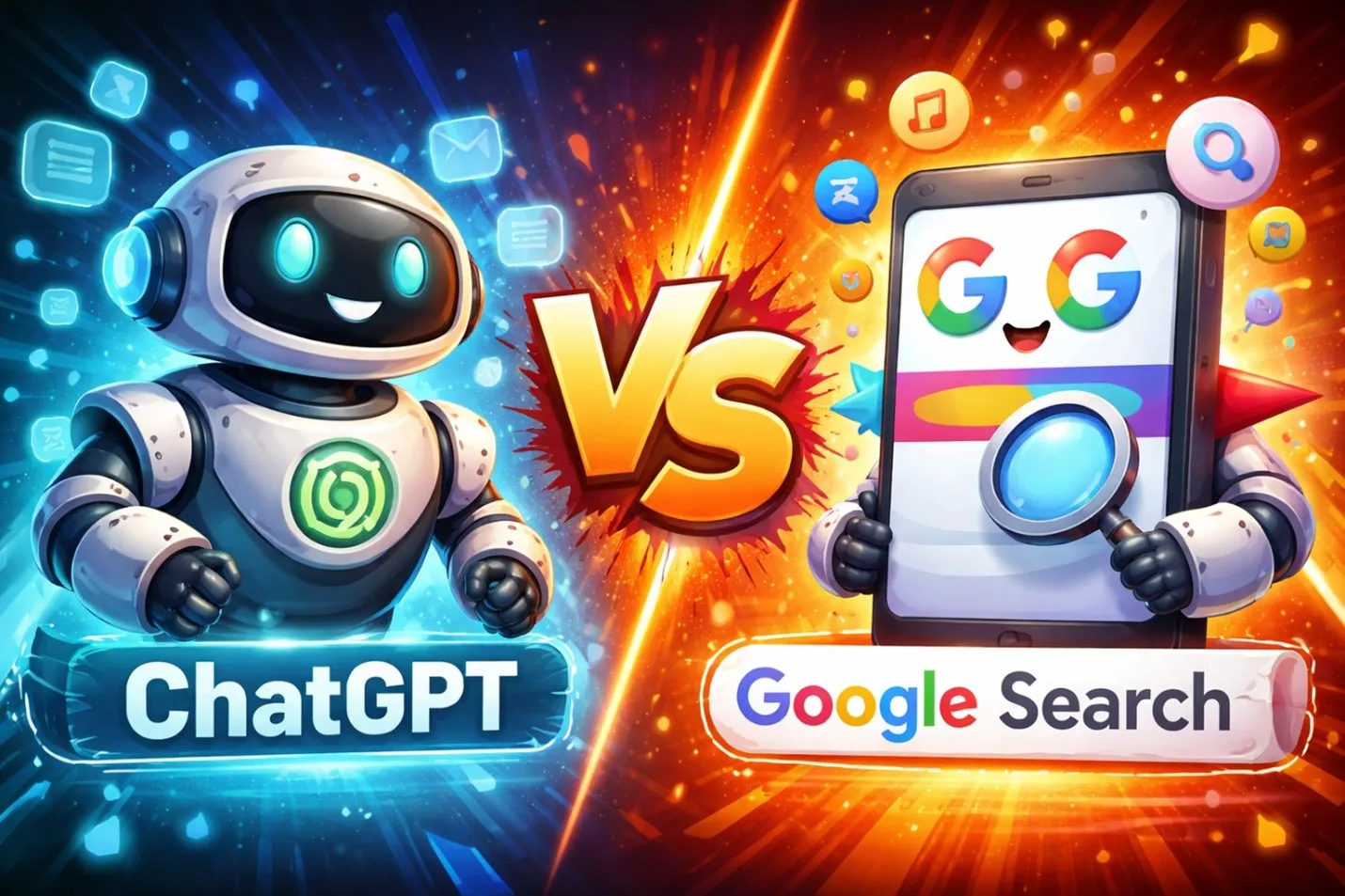
ChatGPT Vs. Google Search: What is better for research?
Google Search is a traditional search engine that retrieves and ranks existing web pages from its massive, continuously updated index of the internet.
ChatGPT (especially with its “ChatGPT Search” feature, rolled out starting in late 2024) is an Al language model that primarily generates responses based on patterns in its training data and can optionally pull in real-time web results to ground or update its answers.
Have a quick glance at the infographics link. Search Vs Synthesis: Google Vs ChatGPT for Research
Core Differences in How They Fetch Information
| Aspect | Google Search | ChatGPT (with/without search) |
| Core mechanism | Information retrieval: Crawls the web, builds a huge index, then matches your query against it using algorithms (relevance, authority, freshness, PageRank, etc.). Returns ranked existing pages. | Information generation: Trained on vast datasets (books, websites, etc. up to a cutoff). Predicts the most likely next words. With Search enabled, it can query the web (via partners like Bing), read a few top sources, then synthesize a response. |
| Real-time freshness | Excellent – constantly crawling and indexing. Handles breaking news, stock prices, sports scores instantly. | Limited without Search (outdated after training cutoff). With Search, it’s “semi-real-time” but narrower and depends on what the Al chooses to retrieve. |
| Sources used | Broad and transparent: Usually shows 10+ links, snippets, images, videos, etc. You see the raw diversity of the web. | Narrower: Often synthesizes from 3-5 top results (or just its training data). You get one coherent answer, not a full list |
| Output style | List of links + snippets (plus Al Overviews in some cases). You do the reading and verification. | Conversational paragraphs or summaries. Feels like a direct answer; includes some citations in Search mode. |
| Speed & convenience | Fast for scanning many options. | Faster for a single polished answer; supports follow-up questions in context. |
In short: Google finds and shows you the documents. ChatGPT reads a few documents (or recalls from training) and writes you a new one.
Which One Should You Rely On for Online Research?
Neither one blindly—but Google (or any traditional search engine) is generally more reliable as the foundation for serious research. Here’s why:
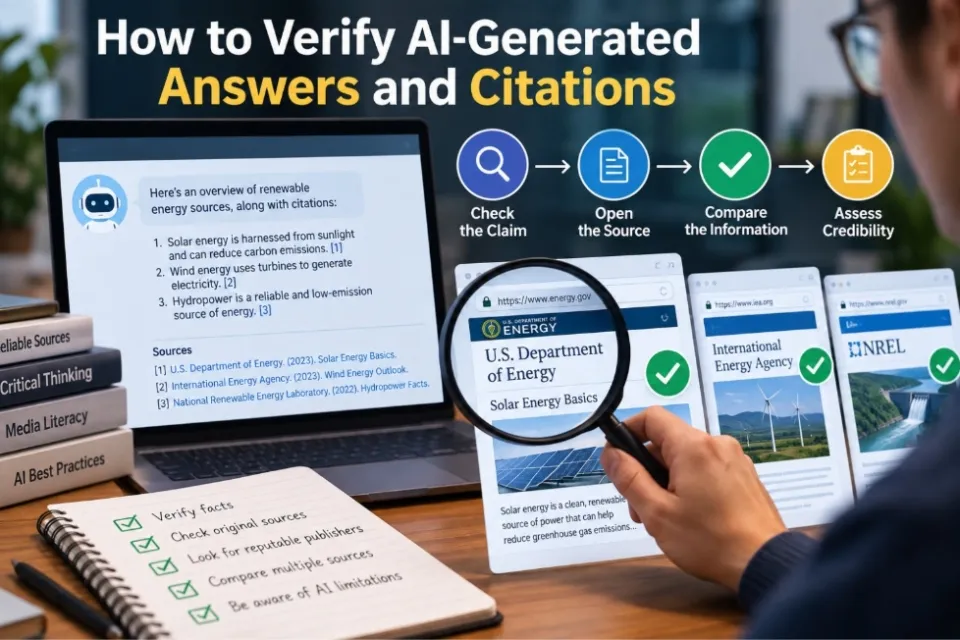
- Transparency & verifiability: Google gives you direct links to primary sources so you can click through, read the original page, check dates, authors, and context yourself. This is critical for academic, professional, legal, medical, or any fact-sensitive work.
- Currency & breadth: Google’s index is vastly larger and updated more aggressively. Studies and real-world tests consistently show it outperforms generative Al on factual accuracy, especially for current events, health information, company data, and specific facts.
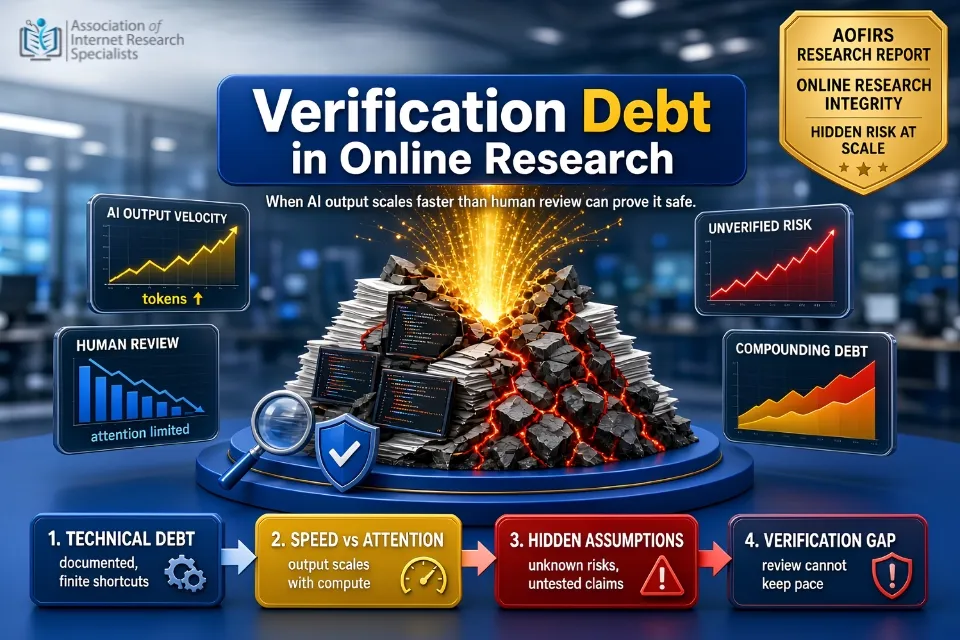
- Lower hallucination risk: ChatGPT (even with Search) can still mis-summarize, invent details, or confidently state something wrong if the underlying sources are thin or conflicting. Google shows you the conflicting sources so you can judge.
ChatGPT shines as a powerful assistant on top of research, not the primary tool:
- Great for synthesis, explanations, brainstorming, turning scattered sources into coherent summaries, or exploring “what if” scenarios.
- Excellent for follow-up questions and conversational depth.
- Ad-free and feels more natural for complex or open-ended topics.
Best practice for online research (what most experts recommend):
- Start with ChatGPT (or me!) for a quick overview, key questions to ask, or to help you phrase better searches.
- Switch to Google to find and verify primary sources, check dates, and explore multiple viewpoints.
- Use the Al again to summarize or analyze the sources you found on Google.
- Always cross-check important claims.
In 2025-2026 comparisons, Google still wins on raw accuracy, source quality, and research-grade reliability, while ChatGPT wins on speed, readability, and conversational helpfulness. They are complementary, not direct replacements.
Quick Summary
- Use Google when you need truth + proof (facts, current info, verification).
- Use ChatGPT when you need understanding + synthesis (explanations, ideas, summaries).
- For serious online research—Google first, Al second. Never treat an Al answer as final without checking the sources.
For a more detailed slide deck, check Optimizing the Modern Research Workflow