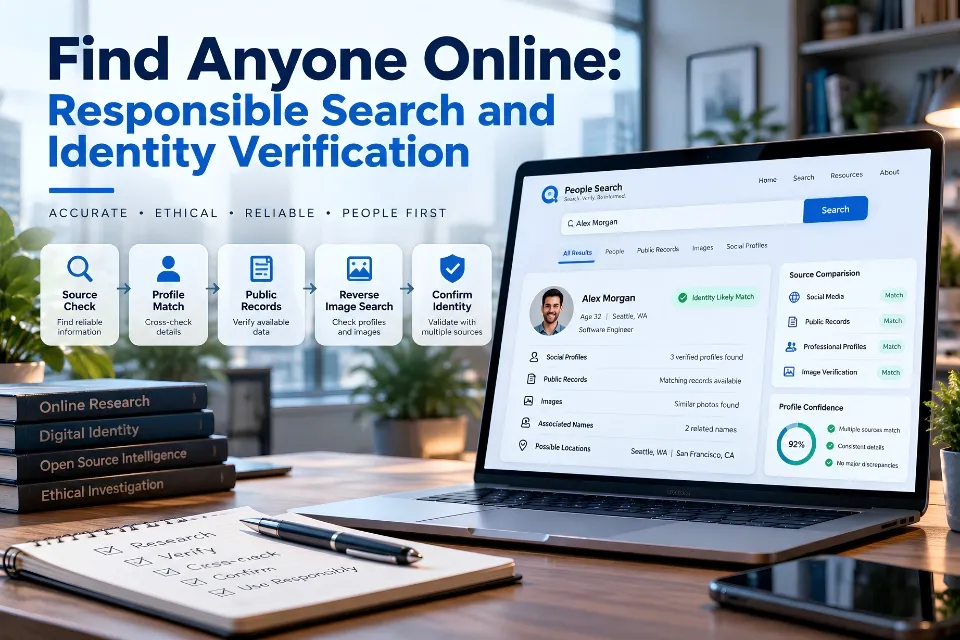

Google Search in 2026 is no longer one search experience. A researcher may move between conventional web results, AI Overviews, AI Mode, Google Lens, Search Live, Google Scholar, Books, patents, datasets, News, Images, and Maps during a single investigation. The skill is no longer simply knowing a few operators. It is knowing which search surface to use, how to narrow the evidence, and how to verify what Google or an AI-generated response gives you.
The most reliable approach is a hybrid workflow: use AI to explore and break down a difficult question, use precision search to locate original evidence, and verify consequential claims against the source itself. Readers who need a compact syntax reference can also use AOFIRS’s Google Search Operator Cheat Sheet while applying the verification methods in this guide.
Important: AI Mode and AI Overviews can accelerate discovery, but they are not evidence by themselves. Google warns that generative responses can make mistakes or miss context. Open the supporting pages, trace claims to primary evidence, and corroborate important findings.
Quick Answer: How to Search Google Professionally in 2026
- Use quotation marks when exact wording, a report title, or a copied sentence matters.
- Use
site:to focus on a particular organization, domain, or URL section. - Use minus exclusions to remove irrelevant meanings, websites, or commercial noise.
- Use
filetype:to locate reports, presentations, spreadsheets, and other documents. - Use
before:andafter:for date-oriented searching, then verify the date on the source. - Use AI Mode to explore complex or multi-part questions, not to replace source checking.
- Use Scholar, Books, Patents, Dataset Search, News, Lens, or Maps when the evidence type calls for a specialized search surface.
- Read laterally by leaving an unfamiliar website and investigating its ownership, expertise, evidence, and reputation elsewhere.
What Has Changed About Google Search in 2026?
Google has expanded generative search across AI Overviews and AI Mode while keeping conventional web results central to retrieval. AI Mode is designed for conversational, multi-step, and multimodal questions. It can explore subtopics, compare options, and continue through follow-up questions. Conventional Search remains more dependable when you need exact wording, a known publisher, a particular file format, or reproducible filtering.
This distinction should shape the workflow. AI is strong at exploration, terminology discovery, and synthesis. Operators and filters are often stronger when the research task is to locate a specific document, institution, date range, quotation, or primary source. AOFIRS’s guide to the invisible web in the age of AI explains why neither Google nor an AI interface provides complete access to all online information.
| Search approach | Best for | Main strength | Main limitation |
|---|---|---|---|
| Conventional Google Search | Exact phrases, known sites, files, dates, and primary sources | Precise constraints and inspectable results | Complex questions may require several searches |
| AI Mode | Exploration, comparisons, multi-part questions, and follow-ups | Builds a research map quickly | Can misinterpret sources or overstate conclusions |
| AI Overviews | Fast orientation and terminology discovery | Summarizes a topic above conventional results | A citation may not support every generated phrase |
| Specialized Google surfaces | Scholarship, books, patents, datasets, news, images, or places | Matches retrieval to the evidence type | Coverage and ranking rules differ by product |
Which Google Search Operators Still Work in 2026?
Google’s current public guidance explicitly documents a relatively small core: quotation marks, site:, minus exclusions, before:, after:, and filetype:. Google Search Central also documents imagesize: and src: for image searching. Commands such as intitle:, inurl:, intext:, OR, and AROUND(X) may remain useful in practice, but they are not all guaranteed in Google’s main current operator guidance.
That distinction matters. Undocumented does not mean useless; it means Google makes no current public commitment to the syntax. Search operators also do not turn Google into a deterministic database. A site: query, for example, should not be treated as a complete inventory of everything Google has indexed.
| Operator | 2026 status | Research use | Example |
|---|---|---|---|
"exact phrase" |
🟢 Documented | Find exact wording, titles, and quotations | "national artificial intelligence strategy" |
site: |
🟢 Documented | Search a domain, URL, or section | site:who.int antimicrobial resistance |
-term |
🟢 Documented | Exclude a word, meaning, or site | jaguar conservation -car |
filetype: |
🟢 Documented | Find PDFs and other file types | "food security" filetype:pdf |
before: / after: |
🟢 Documented | Constrain results by update date | AI policy after:2026-01-01 |
intitle:, inurl:, intext: |
🟡 Useful but not in the core guide | Focus terms in page components | intitle:"annual report" energy |
OR, AROUND(X) |
🟡 Behavior can vary | Alternative terms and proximity | telework OR "remote work" |
cache:, related: |
🔴 Removed or unsupported | Do not build a current workflow around them | Use archives or ordinary discovery instead |
15 Advanced Google Search Techniques for Credible Research
1. Find an Exact Statement With Quotation Marks
Put a phrase inside quotation marks when exact wording matters. This is useful for quotations, report titles, policy language, passages from academic papers, and claims that may have been copied across multiple sites.
"national artificial intelligence strategy"A stronger investigative pattern is to search a distinctive fragment from a suspicious sentence. It can reveal earlier versions, syndication, or a likely original source. Do not assume the first matching page is the origin; compare publication dates and trace the wording backward.
2. Search a Specific Website or Section With site:
The site: operator remains one of Google’s most valuable research tools. It can focus a query on an organization, a domain, or sometimes a URL prefix.
site:who.int antimicrobial resistancesite:energy.gov "grid storage"site:example.org/research climateDo not use site: to prove that a page is or is not indexed. Results are still limited by Google’s indexing and retrieval systems. Also, do not treat a top-level domain as proof of credibility. A .gov, .edu, or .org address helps with discovery, but trust belongs to the specific author, evidence, methodology, and claim.
3. Exclude Irrelevant Terms and Websites
Place a minus sign immediately before a word or domain you want to remove. This is useful when a query has multiple meanings or commercial platforms dominate the results.
jaguar conservation -car -vehicle"battery recycling" policy -site:pinterest.com -site:amazon.comYou can also use -site: for lateral research. If you want to learn what independent sources say about an organization, search its name while excluding its own domain. Use exclusions carefully because removing too many source types can introduce a different kind of bias.
4. Find Reports and Documents With filetype:
For professional research, filetype: is more useful than many so-called secret search tricks. Combine it with an organization, phrase, and date constraint to locate original reports.
"global food security" filetype:pdfsite:oecd.org productivity filetype:pdf"energy storage" site:energy.gov filetype:pdf after:2025-01-01A PDF is a format, not a credibility signal. Evaluate who produced it, whether the methodology is visible, and whether the document is current enough for your question.
5. Search Before, After, or Between Dates
Use before:YYYY-MM-DD and after:YYYY-MM-DD, separately or together. These constraints are especially useful for policies, product changes, legal developments, and fast-moving technical subjects.
"artificial intelligence regulation" after:2026-01-01 before:2026-08-31Google describes these operators in terms of documents updated before or after a date. The date shown in a result can be Google’s estimate and may differ from the original publication date. Open the page and verify its publication or revision date directly whenever chronology matters.
6. Focus on Titles, URLs, or Page Text
Researchers still use intitle:, inurl:, and intext: to focus terms in specific page components. They can be helpful, but treat them as useful and undocumented rather than guaranteed.
intitle:"annual report" renewable energyinurl:research "machine learning"intext:"methodology" "consumer survey"If the syntax becomes cumbersome, Google’s graphical Advanced Search interface provides controls for terms in the title, text, or URL as well as language, region, update date, domain, file type, and usage rights.
7. Expand a Query With Alternative Terminology
Do not rely on the obsolete tilde synonym operator. Build alternatives explicitly with OR, then include formal terms, plain-language terms, acronyms, earlier names, organizations, product names, and technical equivalents.
"remote work" OR telework OR "distributed work"AI Mode can help at this stage by suggesting terminology and subtopics. Move the useful terms back into conventional web searches to locate inspectable evidence.
8. Build Searches Progressively
Strong researchers rarely create the perfect query on the first attempt. Start broadly, inspect the language used by credible sources, and add one useful constraint at a time.
battery recycling policy"battery recycling" policy"battery recycling" site:europa.eu"battery recycling" site:europa.eu filetype:pdf"battery recycling" site:europa.eu filetype:pdf after:2025-01-01Your first search teaches you how experts describe the subject. Names, acronyms, authors, institutions, report titles, laws, and technical terms discovered there become inputs for the next query.
9. Find the Primary Source Before Settling for a Summary
If a news story cites a new statistic, do not stop at the story. Search for the named organization, exact wording, report title, or file type until you reach the underlying report, dataset, filing, law, or statement.
site:worldbank.org "specific statistic"site:worldbank.org topic filetype:pdfThe evidence chain should move from search result to reporting, from reporting to the cited document, and from that document to its data or methodology. Primary sources are not automatically unbiased, but they reduce distortion introduced by repeated summarization.
10. Search Government and Institutional Sources Strategically
Broad searches such as site:.gov or site:.edu can help identify institutions, but they are usually only a starting point. Once you find the relevant agency or university, target its specific domain.
site:.gov "artificial intelligence" procurementsite:epa.gov "air quality" datasetSpecific institutional targeting reduces noise and makes responsibility clearer. It still does not remove the need to check authorship, evidence, scope, date, and incentives.
11. Use Google Scholar for Scholarly Literature
Standard Search can find papers, but Google Scholar is more appropriate when the question depends on scholarly literature. Scholar supports exact phrases, authors, publications, titles, and date ranges. A practical workflow is to find a recent review, extract important authors and terminology, inspect its references, and use “cited by” pathways to move forward in the literature.
Before citing a paper, verify the DOI, journal, year, authors, and version. A high citation count is useful for discovery, but it does not prove that a paper’s methods or conclusions are correct. AOFIRS also maintains a comparison of academic search engines and AI research tools for research that extends beyond Scholar.
12. Search by Geography Without Relying on location:
Do not treat location:germany as a dependable general web operator. Use explicit geographic language, a national domain, a government agency, a local-language term, or Google’s region settings instead.
renewable energy policy Germanysite:bund.de erneuerbare energien bericht filetype:pdfResults can differ because of country, language, device, recent activity, and personalization. When regional differences matter, record the country, language, date, and search surface used.
13. Use Google Advanced Search When Syntax Becomes Cumbersome
Advanced Search remains valuable for researchers who understand the filtering logic but do not want to memorize every command. Its interface can constrain exact wording, excluded words, language, region, last update, website, location on the page, file type, and usage rights.
The lesson is broader than the interface: advanced searching is about applying constraints that answer a research need, not decorating a query with as many operators as possible.
14. Use Google Lens and Visual Search Carefully
Google Lens can identify objects, extract and translate text, find visually similar material, and search a selected part of an image. “About this image” features may also provide context about when Google first encountered an image and how other websites describe it.
Visual similarity is not proof of origin. A matching image does not establish who created it, when it was made, where it was taken, or whether its caption is accurate. Treat Lens as a discovery tool, then verify provenance using independent evidence.
15. Choose the Google Search Surface That Matches the Evidence
Different information problems deserve different retrieval tools. Scholar is suited to scholarly literature, Books to historical language and bibliographic discovery, Dataset Search to datasets, Patents to inventions and prior art, News to recent reporting, Images to visual material, and Maps to place-based investigation.
The objective is not to use every Google product. It is to select the surface that is most likely to contain the evidence you need, then apply the same verification standards after retrieval.
Advanced Search Operator Combinations
Operators become more useful when they are combined around a clear research purpose. Add a constraint only when it solves a problem in the current result set.
| Research goal | Query example |
|---|---|
| Find an official report | "cybersecurity workforce" site:.gov filetype:pdf |
| Find recent university research | "generative AI" site:stanford.edu filetype:pdf after:2025-01-01 |
| Investigate an organization independently | "Example Organization" -site:example.org |
| Locate European regulatory material | "artificial intelligence" regulation site:europa.eu filetype:pdf |
| Find a phrase in likely report titles | intitle:"state of artificial intelligence" filetype:pdf |
How Google AI Mode Changes Research
AI Mode is strongest when a question is difficult to express as a handful of keywords. It can break a complex question into related subtopics, search across them, and present a synthesized response. That makes it useful for comparisons, exploratory research, and questions with several interacting parts.
For example, instead of running separate searches for offshore wind cost, reliability, and environmental effects, ask AI Mode to compare the latest evidence and identify the primary documents worth reading. Use the response to build a research map, then return to conventional Search to locate and verify the reports.
Do not assume operators control AI Mode. Commands such as
site:andfiletype:are documented for conventional Search, not as deterministic controls inside an AI prompt. If exact filtering matters, use the web results interface.
How to Use AI Overviews Without Treating Them as Evidence
An AI Overview is best treated as an orientation layer. It can explain the broad shape of an unfamiliar subject, reveal terminology, identify organizations, surface disagreements, and lead to supporting pages. It should not be cited as though it were the original evidence.
A citation beside an AI-generated sentence does not prove that the linked page supports every part of the sentence. Use this chain:
If a claim is important enough to publish, open the source and compare the exact wording, number, scope, date, and conclusion with the AI-generated statement.
How to Verify Sources Found Through Google
A credible-looking result is not necessarily a credible source. The practical checks below are more useful than trusting rank, design quality, or a domain ending. AOFIRS’s dedicated guide to website credibility checks provides a deeper checklist for unfamiliar publishers.
- Authority and expertise: Who wrote the material, and what relevant knowledge do they have?
- Evidence: Does the page provide original documents, data, references, or reproducible support?
- Methodology: If it presents research, are sampling, measurement, limitations, and analysis explained?
- Currency: Is the source current enough for the research question?
- Independence: What financial, political, institutional, or advocacy interests may affect the framing?
- Primary status: Is it the original study, filing, policy, dataset, or statement, or someone else’s interpretation?
- Corroboration: Can the consequential claims be independently confirmed?
Use Lateral Reading
A professional-looking website is easy to create. Lateral reading means leaving the page and investigating the source elsewhere rather than reading downward until it feels trustworthy.
- Identify the organization and author.
- Search their names independently.
- Exclude the source’s own domain with
-site:. - Investigate ownership, funding, expertise, and affiliations.
- Find independent reporting, citations, criticism, and corrections.
- Return to the original claim after understanding who is behind it.
Verify AI-Generated Search Answers
AI can compress a nuanced finding into an overgeneralization, attach a topically relevant source that does not support the exact claim, combine figures from different dates, drop methodological qualifiers, confuse a forecast with an observed result, or repeat outdated material.
Do not ask only whether a source exists. Ask whether it supports the exact wording, number, population, date range, and conclusion you intend to use.
A Professional Google Research Workflow
- Define the question. Write down the claim, decision, or evidence you actually need.
- Explore the topic. Use broad Search or AI Mode to identify terminology, entities, organizations, and disagreements.
- Extract useful language. Record names, acronyms, report titles, laws, datasets, authors, and dates.
- Run precision searches. Apply quotes,
site:, exclusions,filetype:, and dates only where useful. - Locate primary evidence. Move from summaries to reports, papers, filings, datasets, official records, or original statements.
- Evaluate the source. Check authority, evidence, methodology, incentives, scope, and currency.
- Read laterally. Investigate unfamiliar authors and organizations outside their own websites.
- Triangulate. Confirm consequential claims through independent evidence.
- Verify AI citations. Compare each important AI-generated claim with the page and original evidence it cites.
- Document the trail. Save the query, search date, search surface, filters, region, language, and important URLs.
Common Google Research Mistakes
- Assuming the first result is the most credible source.
- Equating
.gov,.edu, or.orgwith automatic trustworthiness. - Using a deprecated operator and treating ordinary results as proof it still works.
- Using
site:as a complete index audit. - Adding too many constraints before learning the subject’s terminology.
- Treating a PDF as reliable because it looks formal.
- Accepting AI citations without opening them.
- Confusing discovery with verification.
Conclusion
Advanced Google searching in 2026 is not about memorizing dozens of secret commands. The durable skills are to formulate a precise question, choose the right search surface, constrain retrieval when needed, learn terminology as you search, move toward primary evidence, evaluate sources laterally, verify AI-generated synthesis, and preserve a research trail.
Quotation marks, site:, exclusions, filetype:, before:, and after: remain central to precise retrieval. AI Mode, AI Overviews, Lens, and specialized Google tools expand what can be explored. The professional advantage comes from knowing when to let AI broaden the investigation, when to make Search narrow it, and when to stop searching and verify the evidence.
Frequently Asked Questions
What Google search operators still work in 2026?
Google’s current core documentation supports quotation marks, site:, minus exclusions, before:, after:, and filetype:. Search Central also documents image-specific commands. Other operators may work in practice without being guaranteed in the current core guide.
Does the site: operator still work?
Yes. It can target a domain, URL, or URL prefix. Its results are subject to indexing and retrieval limits, so it should not be treated as a complete indexation audit.
Does Google’s cache: operator still work?
No. Google removed the operator from Search. Use a reputable web archive when you need to investigate an earlier public version of a page.
How do I find PDFs on Google?
Use filetype:pdf, then combine it with a phrase or publisher. For example: site:worldbank.org "climate risk" filetype:pdf.
How do I search Google by date?
Use after:YYYY-MM-DD and before:YYYY-MM-DD. Verify the actual publication or revision date on the source when chronology matters.
What is Google AI Mode?
AI Mode is Google’s conversational search experience for complex questions, comparisons, multimodal input, and follow-ups. It can accelerate exploration, but important claims still need source verification.
Is AI Mode better than traditional Google Search?
Not universally. AI Mode is often better for exploratory and multi-part questions. Conventional Search is usually better for exact phrases, known sources, particular file types, and reproducible constraints. Professional research benefits from using both.
Can AI Overviews and AI Mode make mistakes?
Yes. They can misread sources, omit context, combine incompatible facts, or attach citations that do not support the full generated claim. Open and compare the supporting evidence before publishing important information.
How can I tell whether a Google result is credible?
Investigate the author and publisher, inspect evidence and methodology, check the date and potential conflicts of interest, trace claims to primary sources, read laterally, and corroborate consequential facts independently.