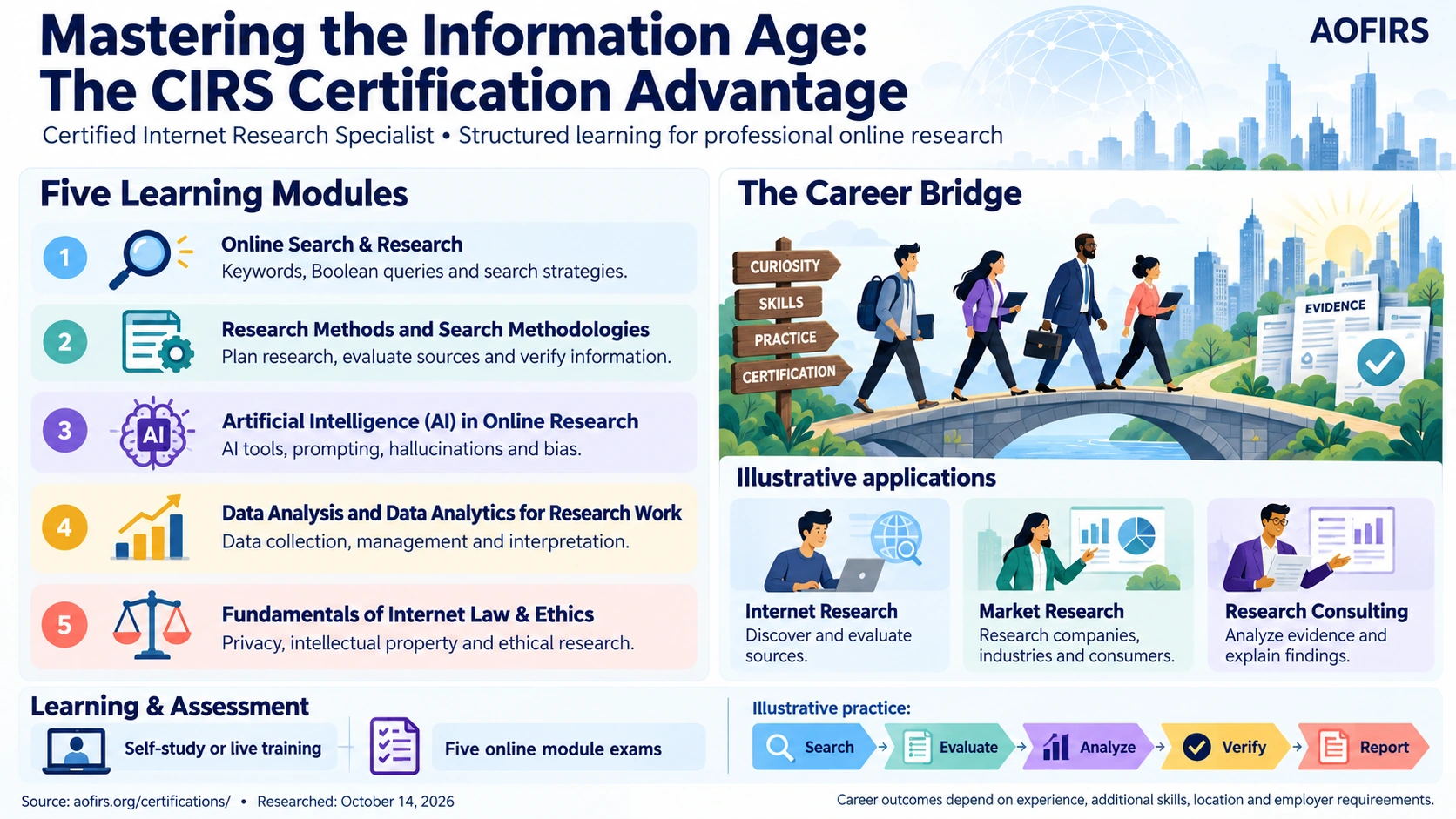
Companion Publications & Core Guides:
• Explore the complete slide analysis in The Evolving Role of the Researcher in the Age of AI-Integrated Web Search.
• Read the comprehensive white paper: Information Retrieval in the Age of AI.
• Review syntax engineering in The Search Query Matrix: Mastering Cross-Engine Syntax and conversational querying in The AI Search Revolution: From Keywords to Conversations.
• Audit algorithmic verification methods in Hacking AI for Deep Research: Moving from Consensus to Integrity.
The Paradigm Shift: From Manual Data Gathering to the AI Orchestrator
For more than two decades, professional digital investigation relied on a manual, deterministic model. A researcher identified a problem, selected a commercial search engine, constructed discrete Boolean strings (using syntax such as AND, OR, site:, and filetype:), evaluated page after page of ten blue links, opened dozens of browser tabs, manually scraped text snippets, and painstakingly assembled an analytical report. This traditional model was linear, labor-intensive, and inherently vulnerable to researcher fatigue and selective attention.
The AI-augmented era redefines this workflow entirely. As highlighted in the architecture graphic above, research is no longer defined by manual execution, but by orchestration. The modern researcher functions as an intelligence conductor—defining research boundaries, constructing structured recursive prompts, assigning specialized sub-tasks to autonomous software agents, and critically validating synthetic outputs against primary ground truth.
Specialized Intelligence Engines: Sourcing, Synthesis, and Real-Time Integration
A fatal error among novice practitioners is treating all large language models (LLMs) and AI search engines as interchangeable chat interfaces. In reality, modern frontier systems exhibit divergent architectural specializations, retrieval mechanisms, and source citation topologies. Professional orchestration requires assigning the correct query type to the appropriate architectural engine:
1. Perplexity AI & Deep Research
Core Strength: Deep Sourcing & Citation Integrity.
Operational Capability: Autonomous multi-turn web crawlers systematically query dozens to hundreds of academic, governmental, and open-web repositories. Rather than generating probabilistic text from closed parametric memory, these engines pull live source documents, correlate overlapping claims, and return structured, heavily cited investigative briefs suitable for preliminary literature and market reviews.
2. Gemini & ChatGPT (Advanced Reasoning)
Core Strength: Multimodal Synthesis & Agentic Reasoning.
Operational Capability: Equipped with extensive context windows (exceeding one million tokens) and native multimodal understanding, these platforms excel at ingesting messy, heterogeneous data—unstructured PDFs, financial balance sheets, satellite imagery, code repositories, and long-form transcripts—to synthesize conceptual bridges and detect latent structural patterns.
3. Grok & Real-Time Search
Core Strength: Real-Time Integration & Breaking Events.
Operational Capability: Directly integrated with real-time firehoses of social discourse and breaking news feeds, real-time search models bypass indexing latency. They prioritize velocity and event detection, surfacing breaking geopolitical developments, corporate executive reshuffles, or emerging cyber incidents hours before traditional web indexes crawl them.
The Topical Diversity Paradox: Algorithmic Monocultures in Research
While artificial intelligence drastically accelerates publication and output volume, it introduces a severe epistemological vulnerability that every senior investigator must navigate: the Topical Diversity Paradox.
Empirical bibliometric and information retrieval studies in 2025–2026 reveal that as research organizations heavily adopt generative AI, their overall output rises, but their topical diversity sharply declines. Generative language models operate on probabilistic consensus: they predict the most statistically probable continuation of text based on massive pre-training corpuses. Consequently, when prompted with broad research questions, models consistently gravitate toward “well-lit” problems, consensus narratives, and universally cited authorities.
This tendency creates an algorithmic monoculture. When thousands of corporate analysts, academic researchers, and policy advisors query the same foundation models, their conclusions converge upon identical synthetic consensus points. Unorthodox hypotheses, localized primary records, foreign-language archives, and deep-web anomalies are routinely filtered out as statistical noise. The professional AI Orchestrator must actively counteract this bias by injecting counter-factual constraints, forcing adversarial testing, and executing manual deep-web retrieval beyond the reach of standard AI indexes.
Masterclass: Tactical AI Orchestration in Investigative Research
To examine the practical mechanics of deploying large language models as automated research assistants while maintaining rigorous verification controls, review the tactical masterclass below from the Association of Internet Research Specialists:
The Ethical and Skill Mandate: The Three Pillars of Modern Practice
Operating effectively in the AI-augmented era requires moving beyond superficial prompt hacks. Leading international bodies, including the International Committee of Medical Journal Editors (ICMJE 2026 update) and professional legal standards, have established strict operational boundaries for synthetic intelligence in research. The AOFIRS framework codifies these into three non-negotiable pillars:
Pillar 1: Mandatory Multi-Tool Triangulation
Never rely on a single AI engine, model family, or automated summary for factual conclusions. Every automated finding must be triangulated across distinct model architectures (e.g., comparing an Anthropic Claude synthesis with a Google Gemini extraction and a Perplexity retrieval log) and subsequently verified against an authoritative primary ground-truth document (such as a regulatory filing, gazette, court docket, or peer-reviewed journal).
Pillar 2: Advanced Hybrid Competency Development
Researchers must evolve beyond passive consumption of AI responses. Essential modern competencies include:
- Prompt Engineering & System Framing: Formulating deterministic system prompts, role constraints, and structured JSON output schemas that minimize hallucination.
- Algorithmic Bias Auditing: Identifying sycophantic behavior (where an LLM tells the user what it thinks they want to hear) and training-corpus bias.
- Chain-of-Custody & Provenance Tracking: Documenting the exact model version, timestamp, temperature parameter, and retrieval seeds used during data extraction.
Pillar 3: Absolute Human Accountability
Under international scientific and legal standards, artificial intelligence software cannot be listed as an author, co-investigator, or expert witness. Algorithms bear no ethical responsibility and cannot be deposed in legal proceedings. The human researcher retains 100% legal, ethical, and analytical responsibility for every asserted fact, citation, and analytical conclusion produced in an intelligence dossier.
Comparative Architecture: Manual Gathering vs. AI Orchestration
The operational divide between legacy search methodologies and modern AI orchestration is summarized in the matrix below:
| Operational Dimension | Legacy Manual Gathering | Modern AI Orchestrator Model |
|---|---|---|
| Primary Role | Information collector, document scraper, index browser | Workflow conductor, prompt engineer, verification auditor |
| Search Execution | Linear, single-keyword queries across search engines | Recursive agentic workflows, multi-turn conversational retrieval |
| Time Allocation | 80% gathering & collation / 20% synthesis & analysis | 20% prompt architecture & scoping / 80% verification & strategic evaluation |
| Scope & Speed | Constrained by human reading speed (hours to days per dossier) | High-throughput synthesis across thousands of documents in minutes |
| Primary Vulnerability | Researcher fatigue, search engine filter bubbles, missed links | Algorithmic monoculture, sycophancy, plausible synthetic hallucinations |
| Verification Protocol | Manual citation verification during reading | Systematic multi-tool triangulation against primary regulatory/court records |
| Ethical Governance | Direct author ownership of collected notes | ICMJE 2026 compliance: strict transparency, human accountability, audit trail |
Elevate Your Investigative Mastery with CIRS™
Are your research methodologies prepared for the autonomous agent era? The Certified Internet Research Specialist (CIRS™) credential provides industry-standard training in advanced search syntax, open-source intelligence (OSINT), AI orchestration, algorithmic auditing, and defensible verification protocols.
Essential Research Resources
Expand your investigative capabilities with these professional tools, educational guides, and research publications:
- Certification Programs: Explore the complete Certified Internet Research Specialist (CIRS™) Curriculum.
- Advanced Query Engineering: Master specialized Boolean and operator matrices in The Search Query Matrix Guide.
- Deep Research Integrity: Overcome consensus bias and hallucinations with Hacking AI for Deep Research: Moving from Consensus to Integrity.
- Synthetic Media Auditing: Detect manipulated and synthetic images with Identifying Fakes in the AI Era: Visual Verification Toolkit.
- Video Training Vault: Access tactical webinars and video demonstrations across the AOFIRS Video Library.
Frequently Asked Questions
What is an “AI Orchestrator” in the context of professional research?
An AI Orchestrator is a professional researcher who shifts from manually collecting and copying data to designing, commanding, and evaluating automated AI-driven workflows. Instead of manually parsing hundreds of search results, an orchestrator formulates structured queries, deploys autonomous research agents (such as Perplexity Deep Research or multi-agent systems), coordinates multimodal synthesis, and applies rigorous forensic cross-examination to verify synthetic findings against primary ground-truth sources.
How does generative AI cause a decline in research topical diversity?
Large language models operate by predicting the most statistically probable sequence of tokens based on massive pre-training datasets. Consequently, when presented with complex research inquiries, they naturally gravitate toward consensus viewpoints, frequently cited papers, and “well-lit” subjects. Researchers who rely exclusively on AI summaries without independent source triangulation risk falling into an algorithmic consensus trap, overlooking niche archives, dissenting scholarship, and non-digitized primary records.
How do professional researchers verify AI-generated citations and claims?
Professional investigators employ a multi-step triangulation protocol: First, never accept an AI-generated URL, author name, or document title without clicking through to verify the live host. Second, compare the extracted claim across two or more competing model architectures (e.g., Anthropic Claude vs. Google Gemini). Third, trace the factual claim directly back to its original primary source—such as a certified government register, corporate securities filing, judicial docket, or peer-reviewed publication.
Can artificial intelligence tools be listed as authors on research publications?
No. Under global publication and ethics standards, including ICMJE 2026 guidelines and international copyright laws, artificial intelligence models cannot be listed as authors, co-authors, or expert witnesses. Authorship requires accountability, legal liability, and ethical agency—qualities that software algorithms do not possess. Human researchers must take 100% responsibility for the accuracy, integrity, and ethical compliance of the final work.
What specific skills are required to become certified as an AI-augmented researcher?
The Certified Internet Research Specialist (CIRS™) program trains practitioners across five essential competencies: advanced query architecture and Boolean logic, deep-web navigation, OSINT extraction methodologies, prompt engineering and automated agent orchestration, and forensic source verification and ethics. Candidates must demonstrate the ability to construct repeatable, defensible research workflows that combine algorithmic speed with human critical judgment.