In the modern academic landscape, groundbreaking research is no longer confined to the pages of prestigious journals. While peer review remains the gold standard for validation, the impact of your work is increasingly measured by its visibility and accessibility.
To ensure your findings reach colleagues, policymakers, and the public, you must treat your research as a brand. By leveraging social media and Search Engine Optimization (SEO), you can transition from a passive participant to an influential voice in your field.
Building Your Digital Laboratory: Social Media Tools
Social media isn’t just for networking; it’s a powerful distribution engine for scholarly content. Here is how you can use specific platforms to amplify your reach:
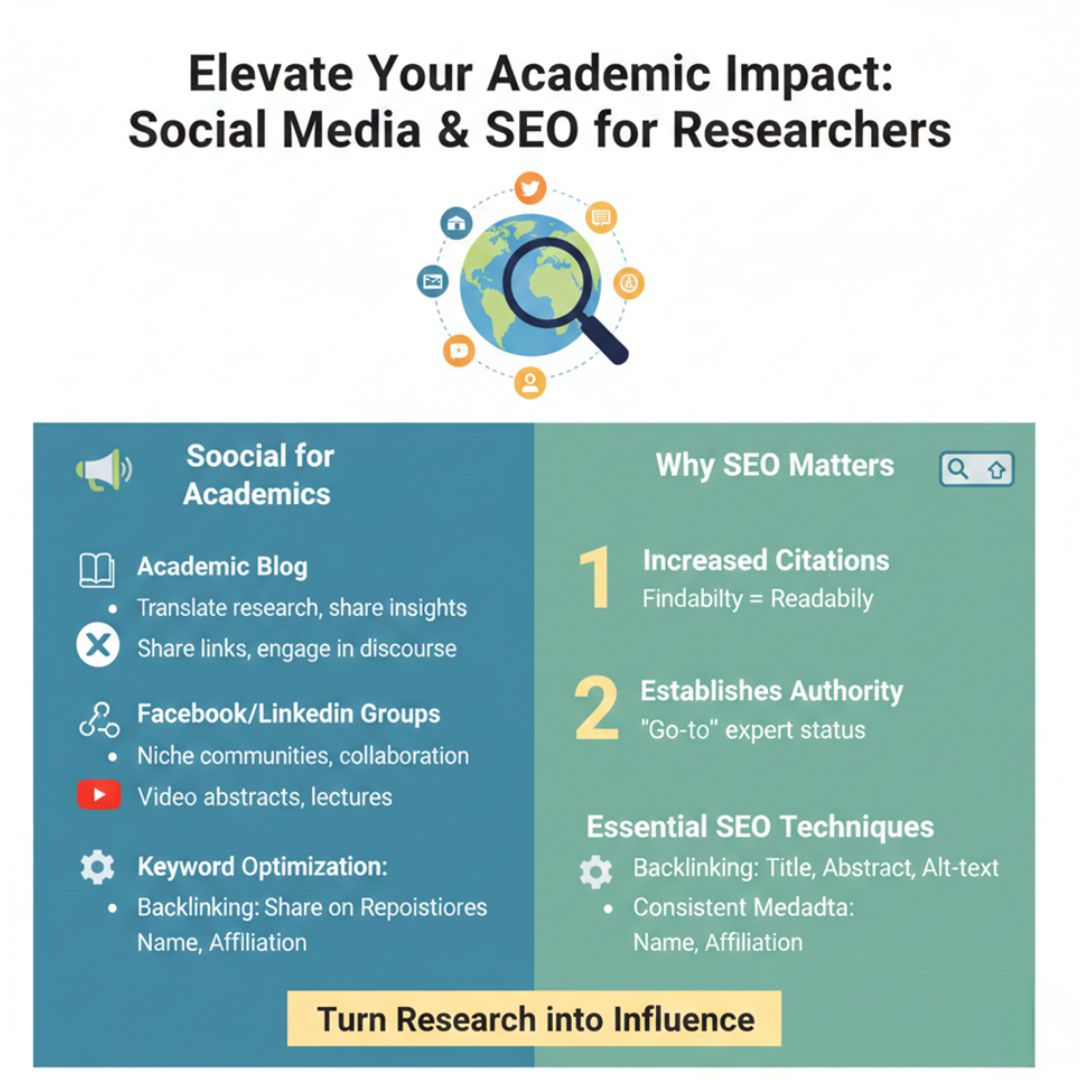
- Academic Blogging: A blog allows you to “translate” complex papers into accessible narratives. It provides a space for preliminary findings, thought leadership, and behind-the-scenes insights into your methodology.
- Twitter (X): This is the “water cooler” of the academic world. Use it to share links to new publications, engage in real-time debates during conferences, and connect with journalists looking for expert commentary.
- Facebook & Google+ Groups: While Google+ has evolved, niche communities on platforms like Facebook or LinkedIn offer focused environments for specialized research groups to share resources and deep dive into specific datasets.
- YouTube: Video is a high-engagement medium. A three-minute “video abstract” or a recording of a lecture can humanize your research and make it digestible for a global audience.
Mastering the Search: Why SEO Matters for Researchers
Most people—including your academic peers, begin their literature review with a search engine. If your research doesn’t appear on the first page of Google or Google Scholar, it effectively doesn’t exist for a large portion of your potential audience.
Why You Should Care About Rankings
Higher search rankings lead to increased citations. When your work is easy to find, it is more likely to be read, shared, and referenced in subsequent studies. Furthermore, a strong search presence establishes your authority, making you the “go-to” expert when peers or media outlets search for specific keywords.
Essential SEO Techniques for Academics
- Keyword Optimization: Identify the terms peers use to search for your topic. Ensure these keywords appear in your paper’s title, abstract, and the “Alt-text” of any images you upload.
- Backlinking: When other reputable sites link to your research, search engines view your content as more authoritative. Share your work on institutional repositories and academic networking sites like ResearchGate.
- Consistent Metadata: Ensure your name and affiliation are consistent across all platforms to help search engines “cluster” your contributions together.
Your Social Media Strategy: A Blueprint for Academic Reach
A well-defined social media strategy ensures your efforts are targeted and effective. Here’s a blueprint to guide your online engagement:
1. Identify Your Audience & Goals: Are you targeting fellow researchers, potential collaborators, students, or the public? Your content and platform choices will vary. For example, ResearchGate is ideal for peer-to-peer engagement, while a blog post might cater to a broader audience.
2. Choose Your Platforms Wisely: You don’t need to be everywhere. Focus on 2-3 platforms where your target audience is most active and where your content format thrives. For visually driven research, YouTube might be key; for quick updates and discourse, Twitter (X) is essential.
3. Content Calendar & Consistency: Plan your content in advance. A consistent posting schedule keeps your audience engaged. Consider:
-
- New Publication Announcements: Share links, key findings, and impactful visuals.
- Behind-the-Scenes: Photos or short videos from your lab, field work, or conference presentations.
- Discussions: Pose questions related to your research, share relevant news, and engage with comments.
- Infographics & Visual Summaries: Simplify complex data into easily shareable visuals.
4. Engage, Don’t Just Broadcast: social media is a two-way street. Respond to comments, participate in discussions, and connect with other academics.
5. Measure and Adapt: Use analytics tools available on each platform to track engagement (likes, shares, comments, clicks). What content performs best? Which platforms drive the most traffic to your research? Use these insights to refine your strategy.
Example Content Ideas:
- Blog Post: “5 Surprising Findings from Our Latest Climate Change Study”
- Twitter (X): “Just published! Our new paper on #AIethics explores [brief key finding]. Read it here: [link] #AcademicTwitter”
- YouTube: A short, animated explainer of a complex scientific process.
- Facebook Group: Share a draft pre-print for feedback from a specialized community.
The Bottom Line
The ivory tower is becoming increasingly transparent. By strategically using social media and SEO, you are not just “promoting” yourself; you are ensuring that your hard-won insights have the greatest possible chance to influence your field and improve the world.
Ready to put these strategies into action? Here’s an example of an infographic that could be shared across your social media channels to summarize the importance of this approach: