Research used to begin with a list of links. Today it often begins with a paragraph written by a machine. That shift is useful, but it changes what a researcher must check. Web search hands you the blueprint: the original pages, records and sources. AI synthesis hands you the finished house: a neat summary built from patterns it has learned. Good researchers know when they need each one, and how to make them work together.
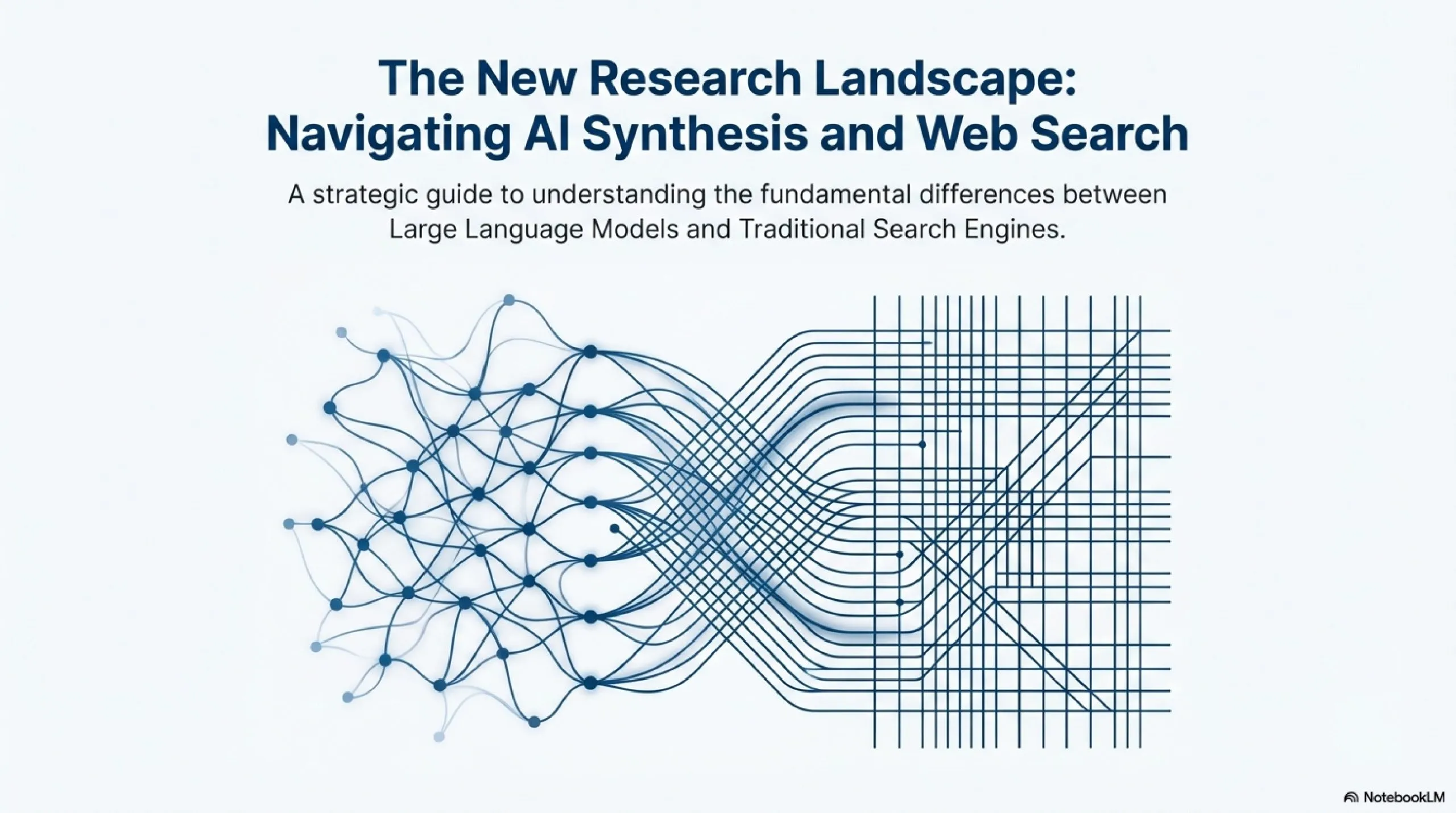
View the Presentation
Browse the 12-slide presentation below, or download it to study offline.
Two Engines, Two Jobs
A search engine retrieves. It crawls and indexes pages, then matches your query against that index and returns documents that already exist. Every result can be opened, dated and traced to a publisher. Its weakness is effort: you must read, compare and assemble the answer yourself.
A large language model synthesizes. It predicts the most likely words to answer your question, drawing on its training and, in some tools, live retrieval. The answer arrives fast and well organized. Its weakness is trust: the text can sound certain while being out of date, incomplete or simply invented.
| Question | Web Search (Blueprint) | AI Synthesis (Finished House) |
|---|---|---|
| What it returns | Original documents and links | A written summary or answer |
| Best for | Finding sources, facts, records, quotes | Explaining topics, mapping ideas, drafting queries |
| Traceability | High: every result has a source | Low to medium: citations may be missing or wrong |
| Freshness | Depends on the index, usually current | Depends on training cut-off and retrieval |
| Main risk | Information overload, SEO noise | Hallucination and false confidence |
| Researcher’s role | Read and assemble | Verify and correct |
The Hybrid Approach to Research
1. Frame with AI
Ask an AI tool to outline the topic, list key terms, name likely experts and suggest search strings. Treat everything it says as a hypothesis, not a finding.
2. Retrieve with search
Turn those leads into precise queries using quotes, site:, filetype: and date filters. Go to primary sources: official records, original studies, company filings and direct statements.
3. Synthesize with AI, using your sources
Paste or upload the verified material and ask the AI to compare, summarize or extract. Grounding it in your own documents sharply reduces invented detail.
4. Verify as a human
Check every claim, number and citation against the original. Note dates, authors and gaps. The final judgement, and accountability, stays with you.
Try It: Build Your Own Search Plan
Type any research question below. The tool suggests precise search queries and steps to check an AI answer, following the hybrid approach.
Red Flags in AI Answers
- Citations you cannot open, or that do not say what the AI claims.
- Precise numbers or dates with no source.
- Confident answers about very recent events.
- Names, quotes or court cases that no search engine can find.
Watch: Mastering Conversational Search
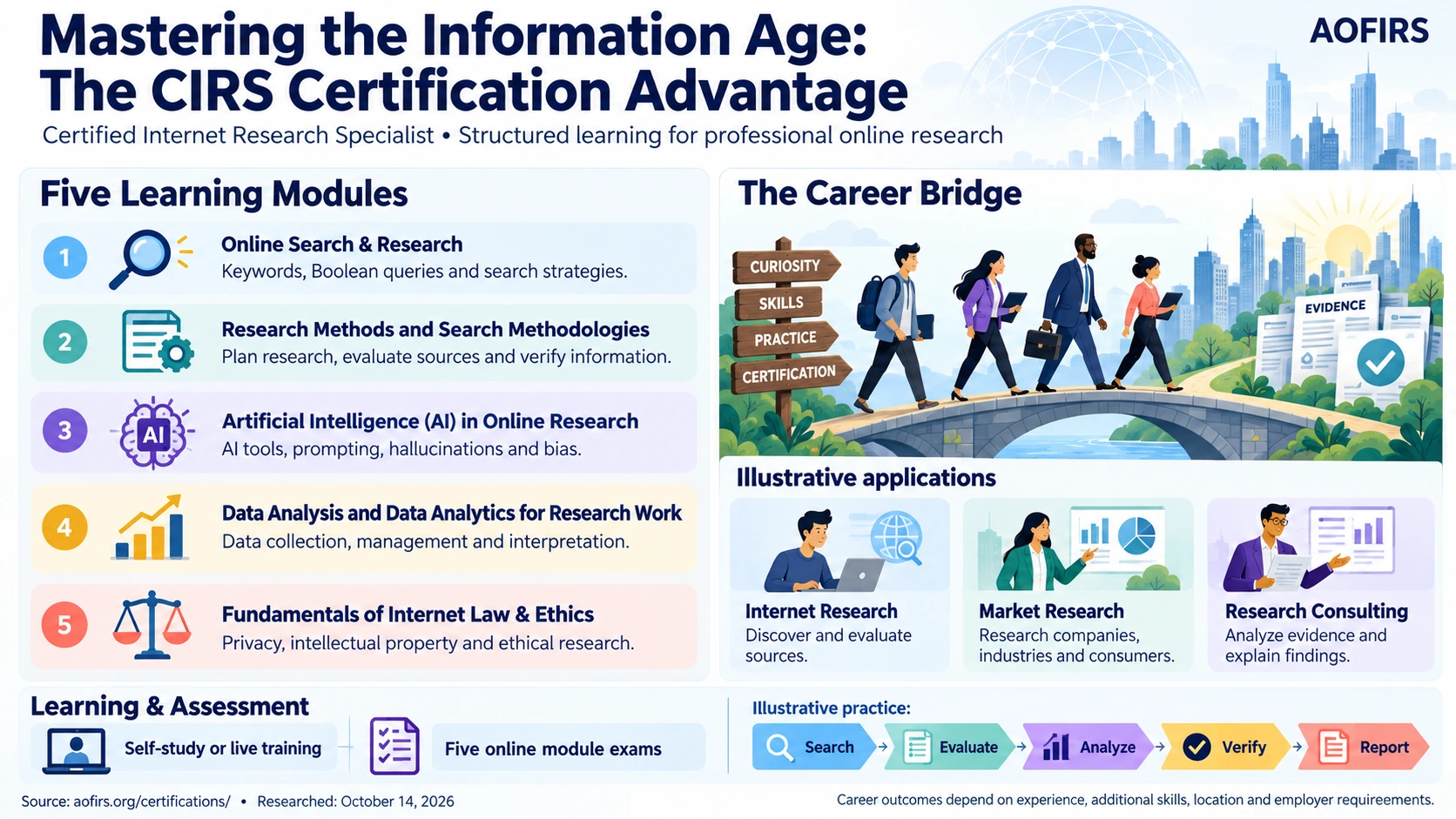
Become a Certified Internet Research Specialist
Learn to combine search precision with AI speed, and to verify every result, in the CIRS certification program.
Related Publications
- Google vs ChatGPT: Key Differences in Web Research and Internet Research
- The Dual Engine Researcher
- The Professional Internet Researcher
- The Modern Internet Research Method (research report)
- Search Mastery Toolkit (PDF)
Frequently Asked Questions
Is AI search replacing traditional web search?
No. AI is excellent at explaining and organizing, but web search is still the way to find and check original sources. Professionals use both.
Can I cite an AI answer in my research?
Cite the original source the claim comes from, after you have opened and checked it. An AI summary on its own is not a reliable source.
How do I reduce AI hallucinations?
Give the AI your own verified documents to work from, ask it to quote where each point comes from, and check every quote against the original.
When should I start with AI instead of search?
When the topic is new to you and you need key terms, an outline or query ideas. Switch to search as soon as you need facts.
What does the hybrid approach mean?
Frame with AI, retrieve with search, synthesize with AI using your sources, then verify as a human.