Previously, “AI experience preferred” was often overlooked in job descriptions as a vague or futuristic requirement. Today, it has become one of the most significant qualifications a hiring manager can include.
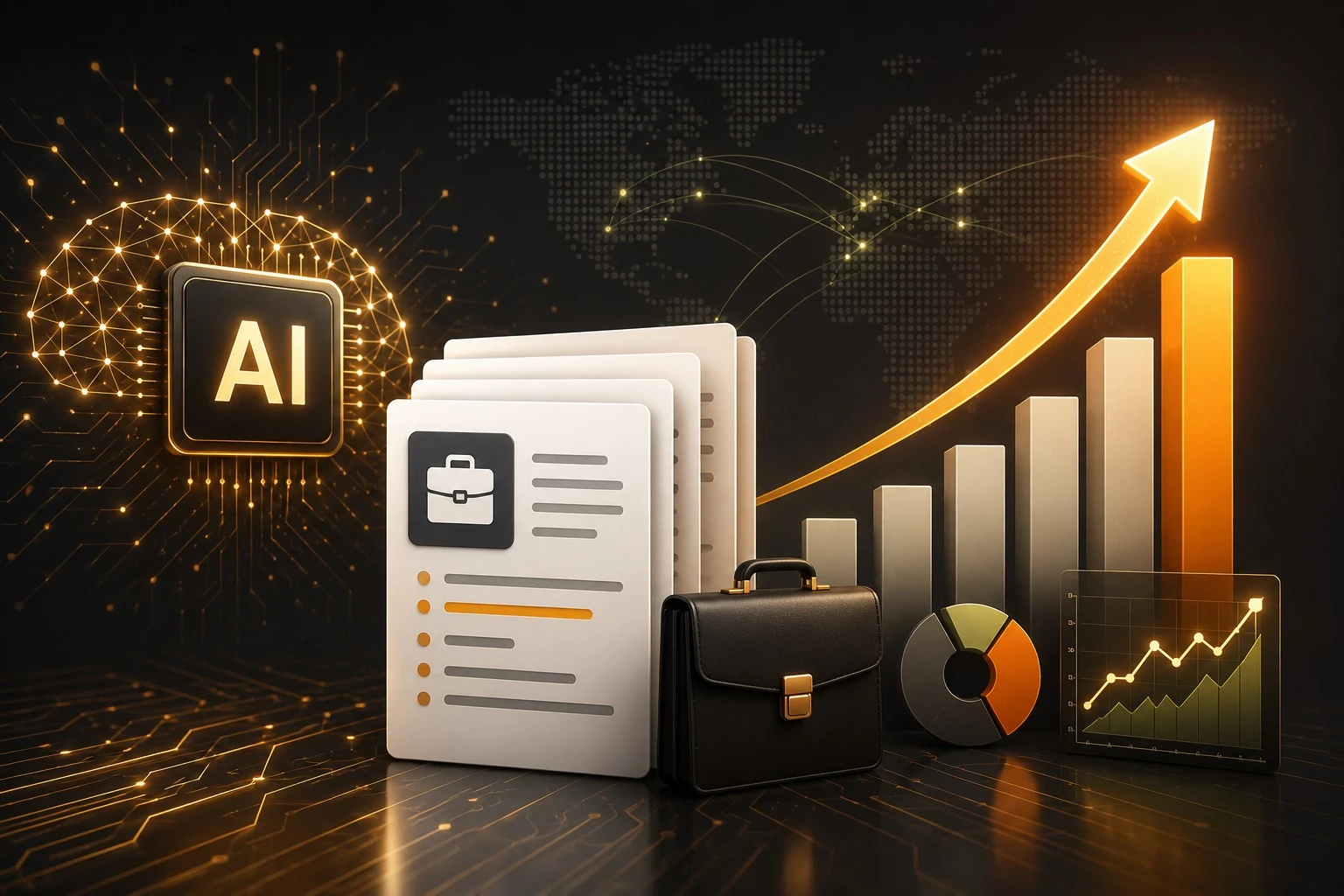
According to Lightcast data cited by edX, over 120,000 job postings required AI skills within a single 30-day period in mid-2025. This represents a 104% increase from the same period the previous year—more than doubling in just one year.
This rapid shift raises two questions: what caused it, and why is it expanding across so many industries?
First, Let’s Look at What the Numbers Actually Show
This growth is not a temporary spike; it has been building steadily and has recently accelerated.
Job postings requiring AI skills jumped 73% from 2023 to 2024, then surged another 109% from 2024 to 2025. Unique job listings for generative AI skills alone went from just 55 in January 2021 to nearly 10,000 by May 2025. On LinkedIn, AI-related postings grew 38% between 2020 and 2024, making it one of the fastest-growing hiring categories on the platform.
Notably, these postings now appear across a wide range of sectors, not just in software companies or research labs. Finance, healthcare, media, construction, manufacturing, and government industries that rarely mentioned AI two years ago—are now actively seeking these skills.
Generative AI Moved AI Out of the Server Room
For most of the past decade, “AI skills” referred to expertise in machine learning, Python, and neural networks, typically limited to engineering teams and research departments. Most roles did not require these skills.
The introduction of tools like ChatGPT, Copilot, and Gemini made advanced AI capabilities accessible to a broader audience. Within months, tasks that previously required deep technical knowledge became manageable for anyone willing to learn.
Employers quickly recognized the value of employees who could effectively use these tools, integrate them into workflows, and interpret their outputs. As a result, “AI literacy” has shifted from a specialized skill to a basic expectation, similar to Excel proficiency in the 1990s.
Currently, the top five AI skills listed in job postings are general AI, AI agents, ChatGPT, prompt engineering, and large language modeling. Three years ago, these terms were rarely mentioned in job descriptions.
The Productivity Gap Between Companies Is Getting Hard to Ignore
A key factor behind urgent hiring is that companies effectively leveraging AI are not just slightly ahead; they are significantly outperforming their competitors.
PwC’s 2025 Global AI Jobs Barometer — which analyzed close to one billion job ads across six continents — found that industries most exposed to AI experienced nearly four times higher productivity growth compared to industries least exposed. Since generative AI’s widespread adoption in 2022, productivity growth in AI-heavy sectors jumped from 7% to 27%. In sectors with minimal AI exposure, it actually declined.
For businesses observing competitors advance rapidly, delaying the development of an AI-capable workforce is a strategic risk. Hiring individuals skilled in AI is now essential to remain competitive, rather than simply to innovate.
AI Skills Pay More — A Lot More
Compensation trends clearly indicate the growing importance of AI skills in the job market.
According to PwC, workers with AI skills now earn an average 56% wage premium over colleagues in similar roles without these capabilities, up from 25% the previous year. This represents a substantial difference in compensation.
Specialized roles paint an even starker picture. AI-related positions are advertising median salaries around $157,000, with data analysis and mathematics roles hitting a median of $170,000.
WAs employees with specific skills command higher salaries, employers seeking to remain competitive must include these skills in job postings. This, in turn, signals to job seekers that acquiring such skills is valuable, creating a self-reinforcing cycle.
New Roles Are Being Created from Scratch
This trend is not limited to existing jobs adding AI requirements; entirely new roles have emerged that did not exist a few years ago.Autodesk’s 2025 AI Jobs Report, which looked at nearly 3 million job postings over two years, found that AI Engineer roles grew by 143%, Prompt Engineer postings surged 136%, and AI Content Creator positions climbed 134%. Machine learning engineers saw 41.8% year-over-year growth — the fastest-growing job category tracked.
JJob titles such as Generative AI Engineer, AI Product Manager, AI Governance Lead, and AI Ethics Specialist, which were uncommon in 2020, are now standard in corporate hiring. Companies are not only reskilling existing teams but also establishing entirely new departments.
It’s No Longer Just a Tech Industry Story
For professionals in finance, healthcare, education, or government, the perception that AI is limited to the technology sector is now outdated.
A 2026 Handshake report found AI skill requirements in 32% of tech job postings, but also in 7.4% of financial services roles and 5.4% of media and marketing positions. Sectors like healthcare, education, and government — which were effectively at zero for AI skill requirements before 2024 — are now recording their fastest growth rates.
Manufacturing reflects a similar trend. The proportion of manufacturing companies using AI more than doubled from 4% in early 2023 to approximately 9% by mid-2025. As AI tools become more user-friendly, barriers to adoption across industries continue to decrease.
There Simply Aren’t Enough People With These Skills
A significant challenge is that demand for AI skills now far exceeds the available supply.
The World Economic Forum’s Future of Jobs Report 2025, which surveyed over 1,000 major employers representing more than 14 million workers, found that 63% of employers consider skill gaps the single biggest obstacle to their business transformation goals through 2030. In response, 77% of employers say they plan to reskill or upskill their workforce internally, while two-thirds plan to hire externally for AI talent at the This challenge is compounded by the rapid evolution of skill requirements. According to the same research, skills demanded in AI-exposed roles are changing 66% faster than in non-AI roles. Individuals hired for their AI expertise two years ago may already need to update their knowledge.t they know.
Your Degree Matters Less Than What You Can Actually Do
One of the quieter shifts accompanying this trend is the softening of degree requirements. Oxford University’s analysis of over 10 million UK job vacancies found that even as AI skill demand surged, the share of AI job postings requiring a formal degree dropped from 36% in 2018 to 31% by 2023. PwC found the same trend: the percentage of AI roles requiring a degree fell from 66% in 2019 to 59Employers increasingly seek evidence of practical ability, such as portfolios demonstrating AI tool usage, a history of integrating AI into projects, and tool-specific certifications. In some cases, these credentials are valued more highly than a formal degree.an a degree.
What This Means If You’re Looking for Work
The key takeaway is that AI skills are no longer a differentiator in most fields; they are rapidly becoming a baseline expectation, with standards rising each year.
This does not require becoming a machine learning engineer. Instead, you should be proficient with AI tools relevant to your field, discuss them specifically in interviews, and ideally provide concrete examples of how you have used them to achieve better results.
Do not wait for your industry to formally require AI skills. Healthcare, education, and government roles rarely sought these skills in 2023, yet they are now among the fastest-growing categories.
Implications for Employers
For employers, the pressure is real but so is the opportunity. Deloitte’s 2025 Human Capital Trends found that companies investing in workforce development were 1.8 times more likely to report stronger financial results.
Relying solely on external AI talent is not sustainable due to limited supply and intense competition. A more effective approach combines targeted external hiring with structured internal development, identifying team members with related skills and providing clear pathways to build AI competency.
As PwC notes, even organizations able to pay a premium for AI-skilled workers risk those skills becoming outdated quickly without ongoing learning and development systems.
Broader Implications
The doubling of AI skill requirements in job postings isn’t noise. It’s the clearest signal yet that a fundamental shift in how work gets done is already underway — not coming, already here.
By 2030, the WEF estimates that workers can expect 39% of their current skill sets to become outdated or need significant updating. The job postings showing up today are employers respoThe central question is no longer whether AI will impact careers, but whether individuals will proactively adapt or be forced to catch up later at a greater cost.I Hiring data indicates that the gap between proactive adaptation and delayed response is widening each month. two answers is widening every month.