For deeper analysis on these foundational dynamics, explore our comprehensive slide presentation on Trust is the New Currency: The Future of Online Research in an AI World, consult the in-depth investigative study on Outsourced Research in the Digital Age: Possibilities, Platforms, and the Transformative Role of Artificial Intelligence, or review our operational guide to AI in Online Research: A Researcher’s Guide to Power and Pitfalls.
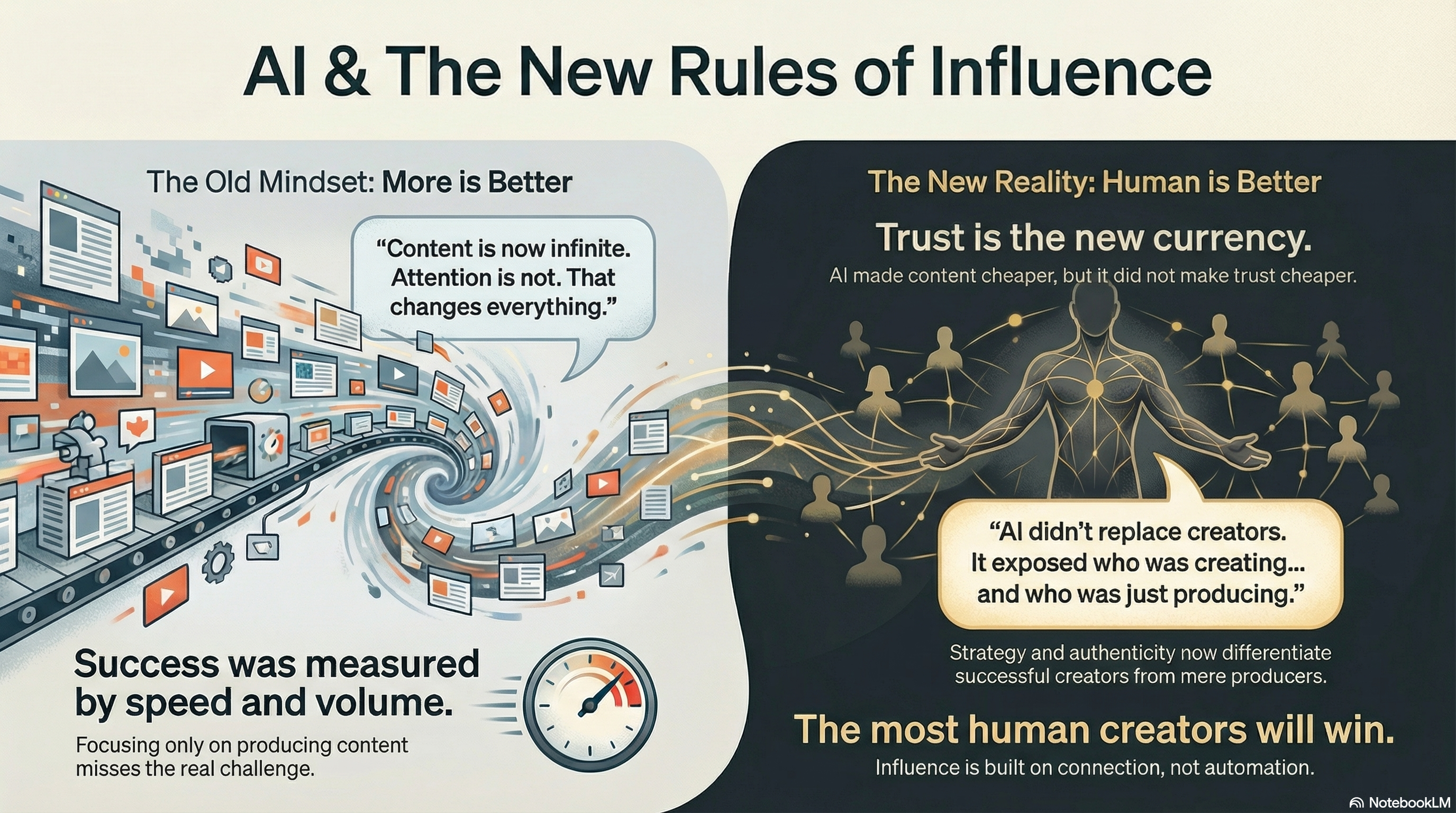
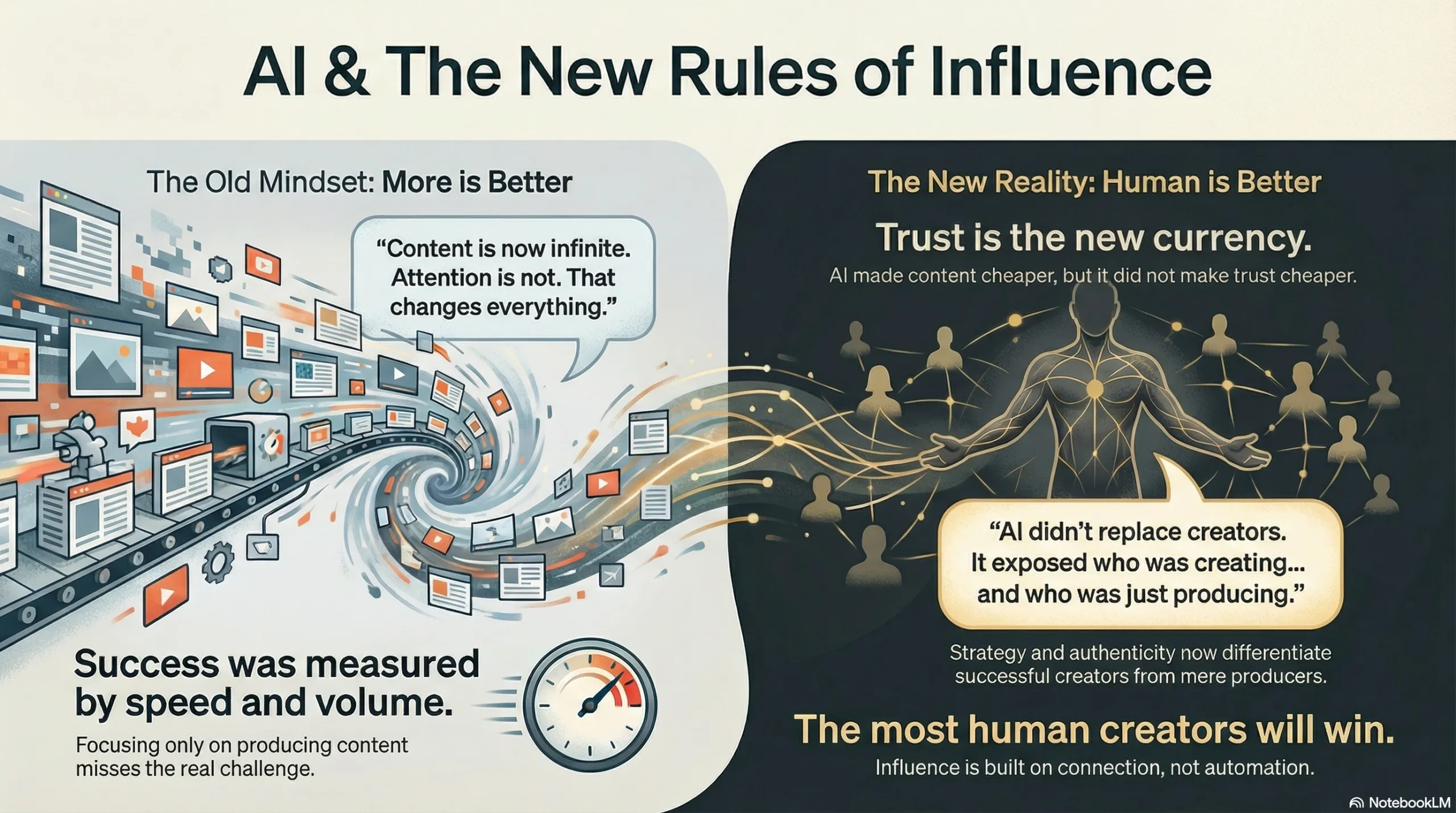
The Great Paradigm Shift: From “More is Better” to “Human is Better”
For two decades, the digital landscape operated under a single dominant operating thesis: volume equals visibility, and visibility equals influence. Creators, agencies, corporate research units, and media publishers optimized their operations around content calendars, keyword densities, and distribution frequency. Algorithms rewarded cadence, while audience discovery mechanisms favored continuous output.
Generative AI broke this economic model overnight. By reducing the marginal cost of producing fluent, grammatically sound prose to zero, foundation models flooded search engines, professional feeds, and social platforms with an overwhelming torrent of synthetic commentary. When every market participant possesses the capability to generate endless articles, executive summaries, and white papers in seconds, volume ceases to function as a competitive differentiator.
Prioritized publishing speed, topical surface coverage, and keyword saturation. Relied on algorithmic feeds to capture fleeting attention spans, treating content production as an industrial assembly line.
Focuses on primary evidence discovery, epistemic accountability, and lived domain experience. Recognizes that in an era of infinite synthetic prose, trust is the single uncopiable asset.
The Economics of Synthetic Abundance: Trust Defies Automation
In classical economic theory, when a commodity becomes superabundant, its exchange value plummets toward zero, while complementary goods that remain scarce capture unprecedented premiums. Generative models commoditized information synthesis, but they fundamentally failed to commoditize veracity.
Decision-makers, enterprise executives, legal counsels, and investigative analysts cannot afford to base multi-million-dollar decisions or legal strategies on probabilistic predictions of the next most likely token. When the cost of erroneous data escalates, audiences actively retreat from unverified aggregations and gravitate toward researchers who stake their professional reputation on primary-source verification and rigorous investigative methodology.
The Creator vs. Producer Dichotomy: Who Actually Generates Value?
The core insight captured in the AOFIRS research briefing highlights a crucial distinction: “AI didn’t replace creators. It exposed who was creating… and who was just producing.”
Before generative models reached ubiquity, mere synthesis—summarizing three secondary articles, reformatting public press releases, or repackaging standard industry talking points—masqueraded as original insight. The individuals performing these tasks were not creating novel knowledge; they were acting as human conduits for procedural reformatting.
- The Commodity Producer: Relies on automated prompts to aggregate existing web consensus. Their output mirrors the statistical average of the open web, adding no novel empirical data, proprietary access, or specialized analytical discernment.
- The True Investigative Specialist: Operates at the frontier of knowledge retrieval. They interrogate corporate registries, unearth hidden regulatory filings, cross-examine cross-border asset structures, conduct adversarial source audits, and synthesise primary evidence into actionable intelligence.
The 4 Pillars of Modern Research Influence
To navigate the post-generative information landscape and establish enduring authority, professional researchers and investigative analysts apply a four-part structural framework:
| Dimension | Traditional Output Model | Generative AI Impact | The 2026 Influence Standard |
|---|---|---|---|
| Speed vs. Rigor | First to publish captures initial search traffic and viral reach. | AI generates instant instantaneous summaries, neutralizing latency advantages. | Depth of provenance, cross-jurisdictional verification, and zero tolerance for hallucinated claims. |
| Content Volume | Daily articles, routine newsletters, and automated content feeds. | Synthetic pollution creates sensory fatigue across executive audiences. | Curated, high-impact investigative deliverables published with verifiable audit trails. |
| Authority Signal | Follower counts, publication frequency, and platform vanity metrics. | Bots and automated accounts inflate digital metrics, eliminating credibility signals. | Institutional credentials, transparent methodologies, and verifiable track records. |
| Audience Relationship | Passive mass consumption driven by programmatic distribution. | Audiences erect defensive filters against unsolicited algorithmic content. | Direct professional trust networks, closed peer communities, and consultative engagement. |
Video Analysis: Understanding AI Reliability and Epistemic Risk
To examine the structural mechanics of algorithmic trust and learn how to identify reliability failures before they compromise critical deliverables, watch this technical briefing from the AOFIRS Research Directorate:
Operationalizing the Influence Rules in Professional Practice
For independent researchers, intelligence specialists, and investigative practitioners, translating the new rules of influence into day-to-day operations requires fundamental adjustments to the investigative pipeline:
- Anchor All Deliverables in Primary Sources: Discard secondary news summaries and automated overviews. Build every intelligence assessment upon primary legal filings, audited financial ledgers, authenticated public records, and verifiable technical data.
- Adopt the V.E.R. Protocol: When employing language models for conceptual brainstorming or linguistic structuring, mandate the three-phase Verify, Edit, Reformulate workflow. Never permit an unverified model output to enter client deliverables.
- Publish the Investigative Audit Trail: Influence flourishes when stakeholders can trace conclusions directly back to primary evidence. Document exact query strings, retrieval dates, archive snapshots, and entity mapping schemas.
- Cultivate Human-to-Human Connection: Influence is ultimately relational, not computational. Engaging stakeholders in collaborative inquiry, offering nuanced contextual interpretation, and demonstrating ethical accountability creates bonds that no foundation model can replicate.
Elevate Your Investigative Authority
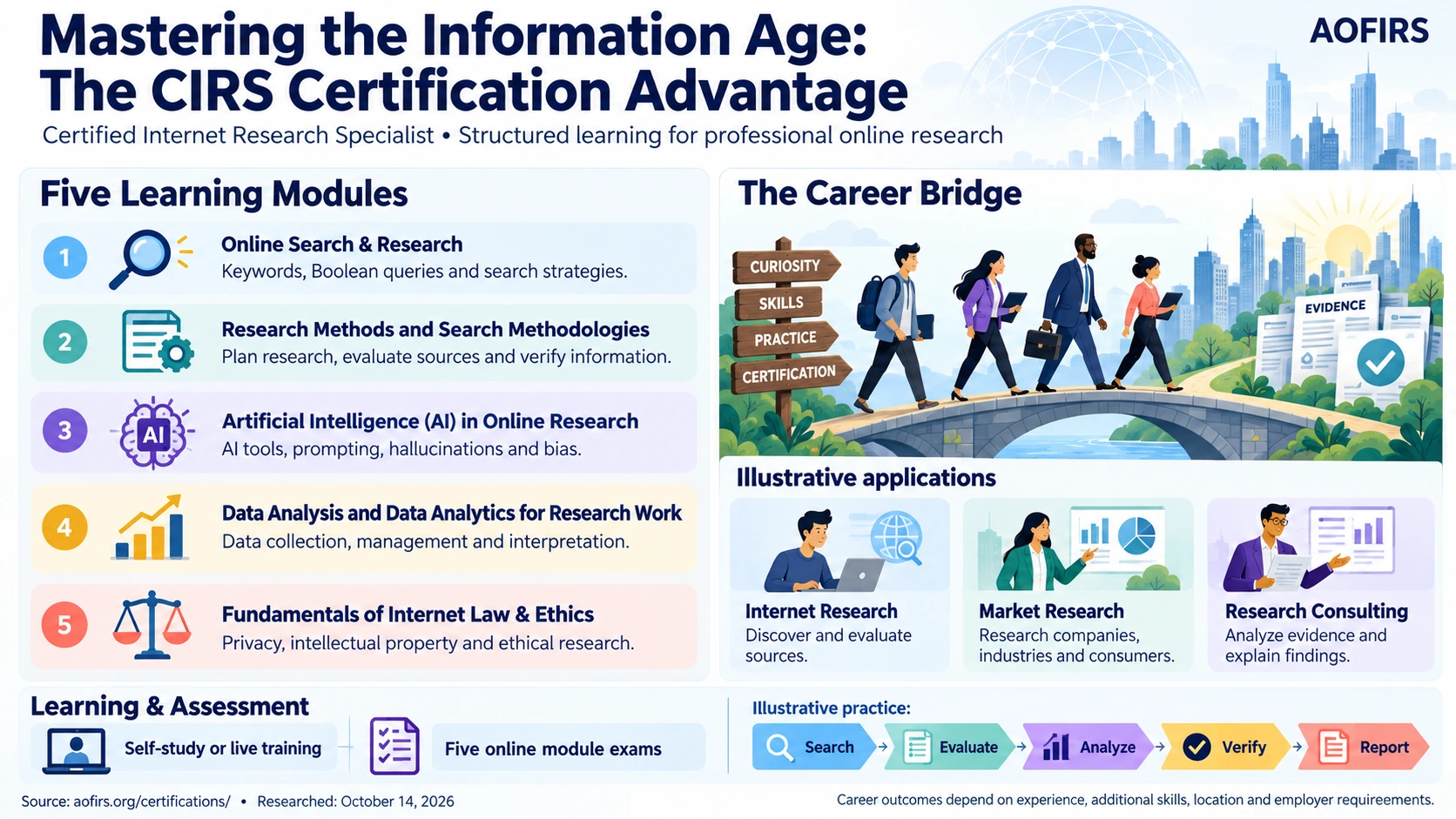
Master the methodologies required to thrive in the augmented intelligence era. The Certified Internet Research Specialist (CIRS) credential establishes your mastery of advanced query engineering, OSINT verification, algorithmic auditing, and high-stakes intelligence synthesis.
Recommended Free Intelligence Resources
- The AI Trust Illusion: Why It Sounds Right Even When It’s Wrong – Technical analysis of algorithmic eloquence versus factual validity.
- AI vs. The Hidden Web: The 2026 Reality Check – Why 90% of critical intelligence remains invisible to standard foundation models.
- Mastering the Information Age: The CIRS Certification Advantage – The strategic framework for modern digital researchers.
- The Search Architect’s Toolkit – Precision query engineering and structural retrieval operators.
Frequently Asked Questions
Why has trust become more critical than attention in the AI era?
Generative AI reduced the cost of producing content to near zero, creating an overwhelming volume of synthetic text and superficial analyses across the web. Because attention is easily manipulated by automated posting, audience attention has fragmented and lost value. In contrast, verified, trustworthy intelligence requires rigorous methodological verification, which remains scarce and highly valuable for high-stakes decision-making.
How can researchers distinguish between authentic insight and AI-generated production?
Authentic insight is characterized by primary-source provenance, traceable methodologies, jurisdictional specificity, and grounded empirical data. In contrast, purely AI-generated production typically exhibits generic consensus phrasing, lack of primary documentation, high fluency paired with superficial analysis, and frequent citation errors or hallucinated assertions.
Does this mean professional researchers should avoid using generative AI tools entirely?
No. Generative AI tools represent exceptionally powerful assistive utilities when deployed for structural formatting, cross-lingual translation, thematic clustering, and query hypothesis brainstorming. However, professionals treat AI strictly as a junior assistant, never as an author or primary source of truth, subjecting all outputs to systematic verification.
What is the creator versus producer distinction outlined in the AOFIRS framework?
Producers perform repetitive synthesis, recycling existing consensus material into standardized formats. Because AI automates procedural synthesis effortlessly, commodity production has lost its commercial leverage. Creators, by contrast, discover new empirical facts, investigate primary sources, conduct adversarial verification, and provide deep contextual discernment that machines cannot reproduce.
How does the CIRS certification prepare professionals for the new rules of influence?
The Certified Internet Research Specialist (CIRS) program trains researchers in advanced information retrieval, hidden web navigation, forensic verification, cross-border corporate intelligence, and algorithmic bias auditing. CIRS-certified specialists master the methodological rigor required to produce verifiable, defensible research reports that establish enduring professional trust.