What is Metasearch Engine?
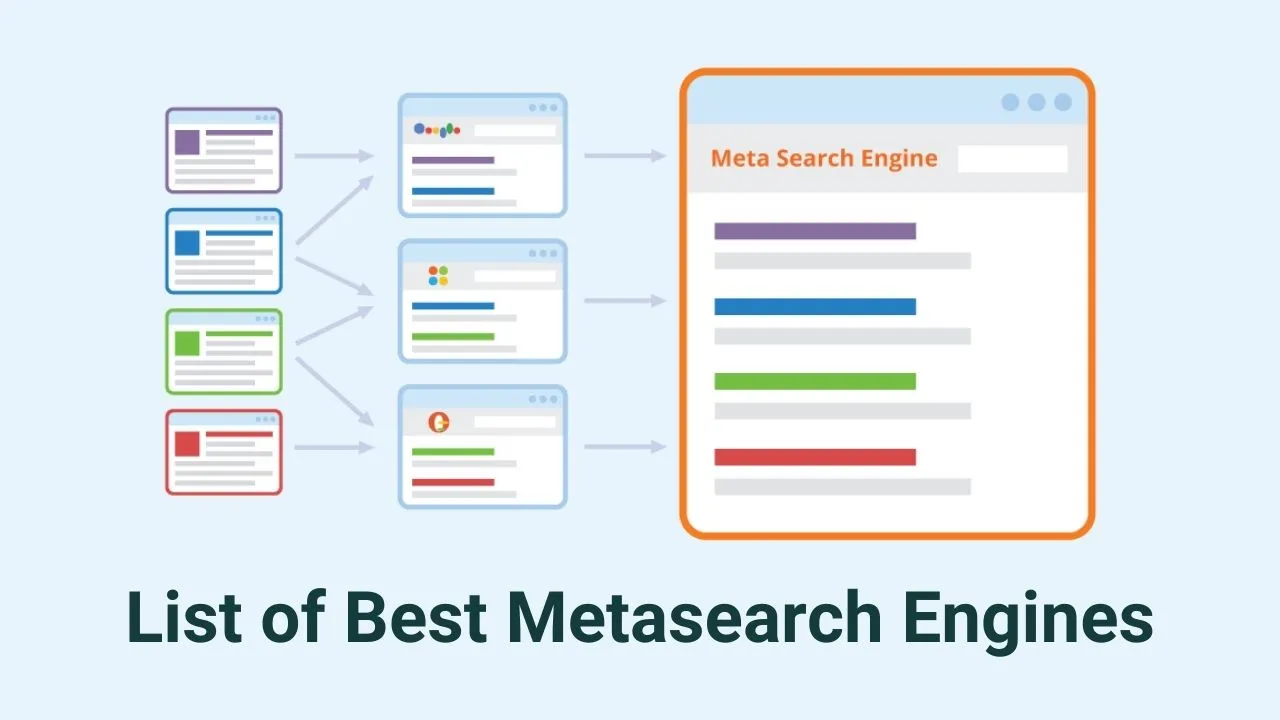
A metasearch engine, also known as a search aggregator, is a web portal that collects and combines search results from multiple search engines into one unified results page. Instead of maintaining its own large index like Google or Bing, a metasearch engine sends your query to several search engines at once and aggregates the results using its own ranking algorithm.
In 2026, metasearch engines have evolved beyond simple aggregation. Many now use:
- AI-powered clustering
- Real-time result merging
- Privacy-enhancing technologies
- Source transparency indicators
They allow users to enter a single query and receive results from multiple engines simultaneously, helping them compare perspectives and retrieve broader insights faster.
Why Use Metasearch Engines in 2026?
The search landscape has changed dramatically. With AI-generated content increasing and search personalization influencing results, relying on a single engine may limit visibility.
Here’s why metasearch engines remain highly relevant:
1. Broader Coverage
A metasearch engine pulls results from multiple sources, reducing algorithm bias.
2. Privacy Protection
Many metasearch engines do not store personal data or search histories.
3. Reduced Filter Bubbles
Aggregating from multiple engines minimizes personalization bias.
4. Time Efficiency
Instead of repeating the same query across different search engines, users receive consolidated results instantly.
5. Research Advantage
For professionals, researchers, and analysts, metasearch engines help validate findings across different data ecosystems.
Metasearch Engines Features
Extensive Search Coverage
Modern meta-search engines integrate multiple web indexes, APIs, and independent crawlers.
Privacy Controls
Several now include:
- Tracker blocking
- IP masking
- No-log search policies
AI-Based Result Ranking
Results are often ranked democratically or algorithmically weighted based on relevance across multiple engines.
Search Clustering
Some engines group search results into topical clusters to improve navigation.
Top List of Best Metasearch Search Engines or AI Search Aggregator
Below is the most up-to-date list of metasearch engines.
Privacy & Anonymity-First Aggregators
In 2026, these are the primary choices for users seeking “Zero-Tracking” search results.
- Startpage:
Startpage delivers Google search results while protecting user privacy. It removes trackers and does not store personal data.
🔗 Visit Website - Searx:
Searx is a privacy-respecting open-source metasearch engine. It aggregates results without tracking users. Community-hosted instances are available worldwide.
🔗 Visit Website - MetaGer:
A German open-source metasearch engine providing privacy-focused searches and filtering options.
🔗 Visit Website - ETools.ch:
A Swiss privacy-focused metasearch engine that complies with strict data protection standards.
🔗 Visit Website - All the Internet:
This privacy-focused search aggregator claims not to collect or sell personal data. It pulls results from multiple alternative search engines and provides web, news, image, and video search.
🔗 Visit Website
Research, Academic & Data Specialized
These engines go beyond simple links by clustering data into themes or performing complex computations.
- Wolfram Alpha:
A computational knowledge engine that calculates results rather than aggregating web pages.
🔗 Visit Website - Carrot2:
An open-source engine that clusters search results into thematic groups. It supports multiple APIs and search frameworks, making it valuable for researchers and developers.
🔗 Visit Website - Goofram:
Simultaneously queries Google and Wolfram Alpha for both traditional web results and computational answers.
🔗 Visit Website - TRIP: Turning Research into Practice:
A clinical search engine designed for evidence-based medical practice.
🔗 Visit Website - Ubersuggest:
A keyword research metasearch engine used for SEO and content strategy.
🔗 Visit Website - Fagan Finder:
A collection of curated tools and search resources for research, including directories and reference tools.
🔗 Visit Website - NHS Evidence:
(Now integrated into NICE/NHS services). A health-focused metasearch engine for clinical and public health research.
🔗 Visit Website
General-Purpose & Web Portals
These “all-in-one” tools aggregate broad results from the largest global indexes (Google, Bing, Yahoo).
- AOL Search:
AOL Search is a metasearch engine that delivers web results powered largely by Google’s index. It combines natural and paid results with additional content integrations.
🔗 Visit Website - Dogpile:
One of the oldest metasearch engines, Dogpile aggregates results from Google, Yahoo, and Yandex. It provides web, image, news, and shopping results.
🔗 Visit Website - WebCrawler:
One of the longest-running metasearch engines aggregating results from major search tools.
🔗 Visit Website - Info.com
Aggregates results from Google, Bing, Yahoo, and others, including directory listings.
🔗 Visit Website - iZito:
Pulls data from multiple engines and presents structured results including Wikipedia entries.
🔗 Visit Website - Zapmeta:
Aggregates site pages, news, videos, and Wikipedia results.
🔗 Visit Website - Zoo:
A meta-search portal offering web, image, video, and shopping search.
🔗 Visit Website - Entireweb:
Entireweb processes millions of searches monthly and provides web and image results through aggregation and indexing partnerships.
🔗 Visit Website - My Excite:
A content portal offering search, news, and email integration.
🔗 Visit Website
- Mamma:
A longstanding meta-search engine offering categorized results from multiple providers.
🔗 Visit Website - Gigablast:
An open-source web index and metasearch engine known for independent indexing efforts.
🔗 Visit Website
Regional & Vertical (Niche) Aggregators
Focused on specific geography, travel comparison, or language-specific needs.
- Seznam:
Czech portal integrating independent indexing and search services.
🔗 Visit Website - HomeToGo:
A marketplace metasearch engine focused on vacation rentals and travel accommodation comparisons.
🔗 Visit Website - Voopter:
Brazilian travel metasearch engine for flight price comparisons.
🔗 Visit Website - Ceek.jp:
A Japanese unified search aggregator that uses Google and Bing data. It offers text-focused results without heavy multimedia or advertisements.
🔗 Visit Website - Yamli:
Arabic-focused metasearch engine enabling phonetic Arabic typing.
🔗 Visit Website - T-Online:
German search portal offering web, video, news, and multimedia search.
🔗 Visit Website - Virgilio:
Italian portal combining directory and metasearch functionality.
🔗 Visit Website - Web.de:
German portal providing email services and integrated web search.
🔗 Visit Website
- OneSeek.de:
German-language metasearch directory providing multi-source search options.
🔗 Visit Website - Vinden:
Dutch meta-search engine offering specialized search options.
🔗 Visit Website - Search Engine Colossus:
An international directory of search engines worldwide.
🔗 Visit Website
Utilities & Directory Tools
- Unabot:
Meta-search engine offering categorized search.
🔗 Visit Website - CurryGuide:
A global meta-search portal offering web search, news, shopping, weather, and categorized search tools.
🔗 Visit Website - SearchEuropa.eu:
European-focused metasearch tool covering legal and document searches.
🔗 Visit Website - Draze:
A family-friendly metasearch engine offering categorized search options for children and safe browsing.
🔗 Visit Website - Fazzle:
Supports multilingual search and aggregates over 100 search engines across categories like downloads, videos, and shopping.
🔗 Visit Website - Fefoo Search App :
An application-based meta-search tool that allows searching across multiple engines in categorized formats.
🔗 Visit Website - FuzzFind Web Trends:
Combines results from major search engines and real-time web trends.
🔗 Visit Website - Incrawler:
Aggregates and organizes search results from multiple engines by relevance.
🔗 Visit Website - Metabear: Supports multiple regional searches through aggregation methods.
🔗 Visit Website - MetaEUREKA:
Searches over 40 search engines simultaneously.
🔗 Visit Website - Yippy:
Automatically categorizes results into clusters for easier filtering and thematic exploration.
🔗 Visit Website - SumSearch2:
A medical evidence metasearch engine connecting to PubMed and research databases.
🔗 Visit Website
AI Search Aggregators of 2026
- Perplexity AI
Perplexity remains the gold standard for “Answer Engines.” Rather than a list of links, it provides a synthesized, cited response.
🔗 Visit Website - Poe by Quora
Poe is the ultimate aggregator for users who want variety. It allows you to search and chat using almost every major model (GPT-5, Claude 4, Gemini 2.1) under one subscription.
🔗 Visit Website - Google Search AI Mode
Google has successfully transitioned from “links” to “overviews.” While Gemini is its chatbot, Google AI Mode is a dedicated search tab that runs on the top-tier Gemini 2.0 models.
🔗 Visit Website - Exa
Formerly Metaphor, Exa is an AI-first aggregator built around “neural search.” It ignores SEO tricks and aggregates content based on the meaning of your query.
🔗 Visit Website - Aymo AI
Aymo has emerged in 2026 as a top-tier competitor for Poe, offering access to 45+ different AI models in a single workspace.
🔗Visit Website
FAQs
How do metasearch engines work?
When a user submits a query, the metasearch engine forwards it to multiple search engines. It waits for responses, aggregates them, removes duplicates, ranks them, and displays unified results.
What is the difference between a search engine and metasearch engines?
A traditional search engine crawls and indexes the web directly. A metasearch engine does not maintain a primary index but instead aggregates results from other engines.
Is DuckDuckGo a metasearch engine?
DuckDuckGo operates as a privacy-focused search engine and also acts as a search aggregator by combining results from multiple sources including Bing, Yahoo, WolframAlpha, and its own crawler.
Conclusion
Metasearch engines continue to play a critical role in web search. In 2026, they are especially valuable for:
- Research validation
- Bias reduction
- Privacy-conscious browsing
- Multi-source comparison
As AI-driven search reshapes the digital landscape, metasearch engines provide transparency and diversified perspectives.
For researchers and advanced search professionals, using metasearch engines alongside traditional search engines enhances search accuracy and reliability.
Beyond these metasearch engines, AOFIRS also provides a comprehensive list of Specialized Search Engines, including databases for People Search Engines, Searchable Directories, Archives, and Portals. Metasearch remains a powerful strategy for those who want deeper, broader, and more reliable search results.