
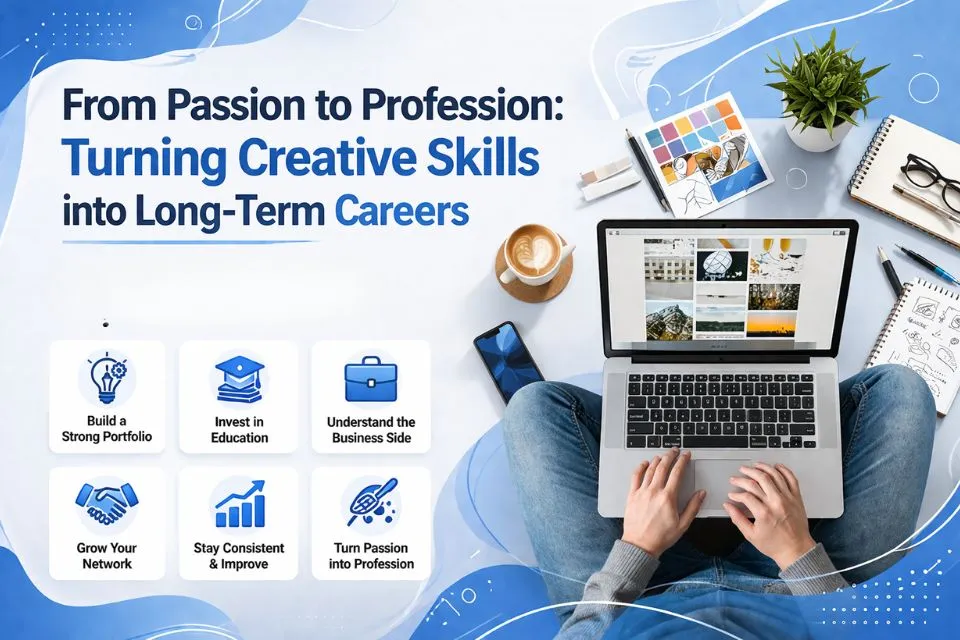
There is a moment most creative people know well. It arrives somewhere between finishing a piece of work you are genuinely proud of and realizing you have been doing it for free. Whether you paint, design, write, photograph, or build things with your hands, the thought eventually surfaces: could this actually become a career? The answer, more often than not, is yes.
Turning creative skills into a sustainable profession is not a fantasy reserved for the lucky few. It is a deliberate process that takes planning, commitment, and a willingness to treat your passion with the same seriousness you would give any other career path.
Laying the Foundation Through Formal Education
Many creatives hit a ceiling when they try to transition from hobbyist to professional. They have raw talent and a growing portfolio, but they lack the structural knowledge and industry credibility that employers and clients expect. This is where formal education becomes a genuine game-changer rather than just a line on a resume. For those serious about design as a long-term profession, pursuing a Masters in Design gives you both the advanced technical grounding and the critical thinking skills that separate working professionals from passionate beginners. It also opens doors to roles, studios, and creative networks that would otherwise take years to access on your own.
Education does not have to mean abandoning everything you have already built. Many programs today are designed around working adults, allowing you to grow your skills without putting your life on hold. The point is simply this: taking your craft seriously enough to invest in it formally sends a signal, both to the industry and to yourself, that you are playing the long game.
Building a Portfolio That Does the Talking
A degree or certification will open doors, but your portfolio is what keeps them open. In creative industries, your body of work speaks louder than any qualification. The strongest portfolios are not the ones that show the most pieces. They are the ones that show the most relevant, focused, and thoughtfully presented work.
Start curating rather than collecting. Pick projects that reflect the kind of work you actually want to do professionally, not just everything you have ever made. Quality matters far more than volume. If your existing work does not yet reflect where you want to go, create new pieces specifically for the portfolio. Passion projects, personal briefs, and speculative work are all completely valid. What clients and employers want to see is your thinking process and your range within a specific area, not a catalogue of everything you have touched.
Understanding the Business Side of Creativity
One of the most common reasons talented creatives struggle to build lasting careers is that they treat their work purely as art and ignore the business mechanics around it. Knowing your worth, understanding contracts, managing client relationships, pricing your services appropriately, and keeping track of your finances are all skills that are just as important as the creative work itself.
This does not mean becoming an accountant. It means understanding that your creativity is a service, and services have value. Many creative professionals find that once they start approaching their work with a business mindset, their confidence grows and their income becomes far more predictable.
Freelance, Employment, or Both
Creative careers rarely follow a single path. Some people thrive in agency or studio environments where collaboration is constant, and the workflow is structured. Others prefer the independence of freelancing, where they control their client list, their schedule, and the type of work they take on. Many professionals end up doing both at different points in their career, and that flexibility is one of the genuine advantages of working in a creative field.
Freelancing tends to suit people who are comfortable with uncertainty and enjoy wearing multiple hats. Employment suits those who prefer stability and the resources that come with being part of a larger team. Neither is superior. The right choice depends on your personality, your financial situation, and where you are in your career. The important thing is to make a conscious decision rather than simply defaulting to whatever comes along first.
Consistency Beats Inspiration
One of the biggest myths about creative careers is that the work flows naturally when you love what you do. In reality, professional creatives produce on deadline, under pressure, and often on days when inspiration is nowhere near. The ability to sit down and do the work regardless of how you feel is what separates a professional from a hobbyist.
Building a routine helps. Treat your creative work like a job, even when it is not yet paying like one. Set hours, meet your own deadlines, and hold yourself accountable. Over time, this consistency compounds. Your skills sharpen, your output grows, and your professional reputation starts to build on its own.
Networking Without Feeling Transactional
Creative industries run on relationships. The people who hire you, refer you, collaborate with you, and mentor you are often the ones you meet in casual, informal settings rather than formal job applications. Attending industry events, joining online communities, sharing your work publicly, and staying genuinely curious about what other creatives are doing all contribute to a network that pays dividends over the years.
The key is to approach networking as relationship-building rather than opportunity-hunting. Show up for others, give credit generously, and engage authentically. The creative world is smaller than it looks, and a good reputation travels fast.
Staying relevant in a creative career also means committing to continuous learning. Tools change, trends shift, and client expectations evolve. The professionals who last are the ones who stay curious and keep developing, not just in their core craft but in the adjacent skills that make them more versatile and more valuable over time. A long creative career is not built on a single breakthrough. It is built on showing up, improving steadily, and treating your passion with the professionalism it deserves.