Professional researchers know a quiet truth about their craft: finding the information is often not the hard part. The hard part is everything that happens around it. Extracting results from multiple sources, organizing them, moving them to the right document or system, formatting them consistently, and keeping everything in sync as new results come in. The intellectual work, the actual analysis, competes constantly with this surrounding logistics.
As artificial intelligence reshapes how research gets done, much of the attention has gone to AI that searches and summarises. Less discussed, but arguably just as useful, is AI that handles the workflow around the research, the gathering, moving, and organising that consumes so much of a specialist’s time.
The Logistics That Surround Every Research Project
Any serious research effort involves more than queries and reading. Findings have to be collected from various tools and databases. They need to be recorded somewhere consistent. Citations and sources must be tracked. Results often have to be moved into reports, shared with collaborators, or fed into other systems for further analysis.
Done manually, this is a significant overhead. A researcher copies a finding from one place to another, reformats it to match a template, updates a tracking sheet, and repeats. None of this requires the expertise of a researcher, yet it makes up a real portion of their working hours, the time that can be spent on analysis is the only thing they can do.
How AI Agents Fit Into the Workflow
Understandable is development AI that can perform multi-step tasks across different systems from simple language instructions, rather than just retrieving or summarizing information.
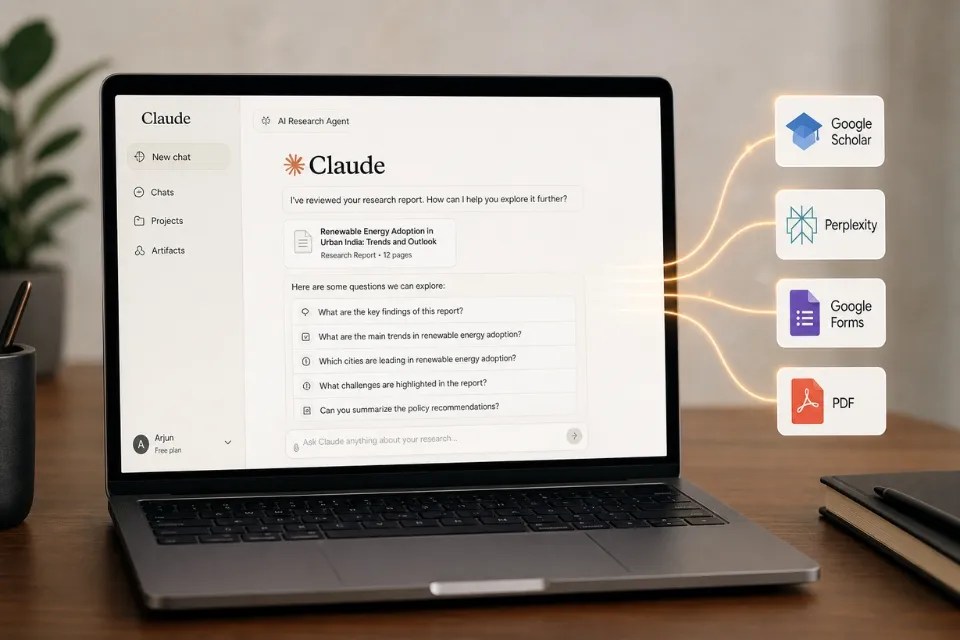
This means the logistics around research can increasingly be handled automatically. AI agents can take results from where they live, organise them into a consistent structure, move them into the right document or system, and keep records updated as new findings arrive. The researcher describes what should happen, and the routine handling takes care of itself. The expertise stays with the human; the clerical work does not.
For professionals whose importance lies in judgment and interpretation, this is a meaningful change. This separates the thinking, which is theirs, from the shuffling, which a machine can do faster and more consistently.
Consistency: An Underrated Benefit
There is a second advantage that researchers in particular should appreciate: rigour.
Manual handling of information introduces inconsistency. One source recorded one route here and another there, a search copied with a small error, a tracking record that is outdated. These papers undermine the credibility on which good research depends. An automated process applies the same handling each time, which means cleaner records, consistent formatting, and a more reliable path from the source to the result.
For a field built on credibility and reproducibility, this consistency is not a minor convenience. It directly supports the integrity of the work.
The Researcher’s Role Does Not Shrink
It would be a mistake to read any of this as diminishing the researcher. The opposite is closer to the truth.
The mechanical environment is handled by automation, but the fundamental aspects of research, such as formulating appropriate questions, verifying the reliability of the source, deciphering the significance of the findings, and formulating conclusions that can be defended, are unquestionably human. If anything, researchers can focus more of their attention on these high-skill choices when the logistical barrier is removed. An automated AI flow can move and organise findings, but it cannot decide what they mean or whether a source can be trusted. That discernment is the specialist’s contribution, and it becomes more central, not less.
The healthiest framing is a division of labour: the machine handles the gathering and organising; the human handles the thinking.
Conclusion
As AI transforms research, the spotlight naturally falls on tools that search and summarise. But for working professionals, an equally important change is happening in the background, in the handling of the workflow that surrounds every project.
When the gathering, moving, and organising can be automated reliably, researchers are freed to spend their time where their expertise actually lies: in analysis, judgement, and interpretation. The search was never the whole job. The work around it was always the hidden tax, and that is the part now becoming lighter.
FAQs
What research tasks can AI agents automate?
Answer: The logistics around research, gathering findings, organising them, moving them into documents, and keeping records in sync.
Does this replace the researcher?
Answer: No. It removes clerical work, leaving the judgement, source evaluation, and interpretation to the human specialist.
How does it support research integrity?
Answer: Automated handling is consistent, producing cleaner records and a more reliable trail from source to conclusion.
Is it different from AI that searches and summarises?
Answer: Yes. This automates the workflow around research, the moving and organising, not just the finding of information.
Do you need technical skills to use it?
Answer: Increasingly no. Newer tools let you describe the workflow in plain language rather than building it with code.