
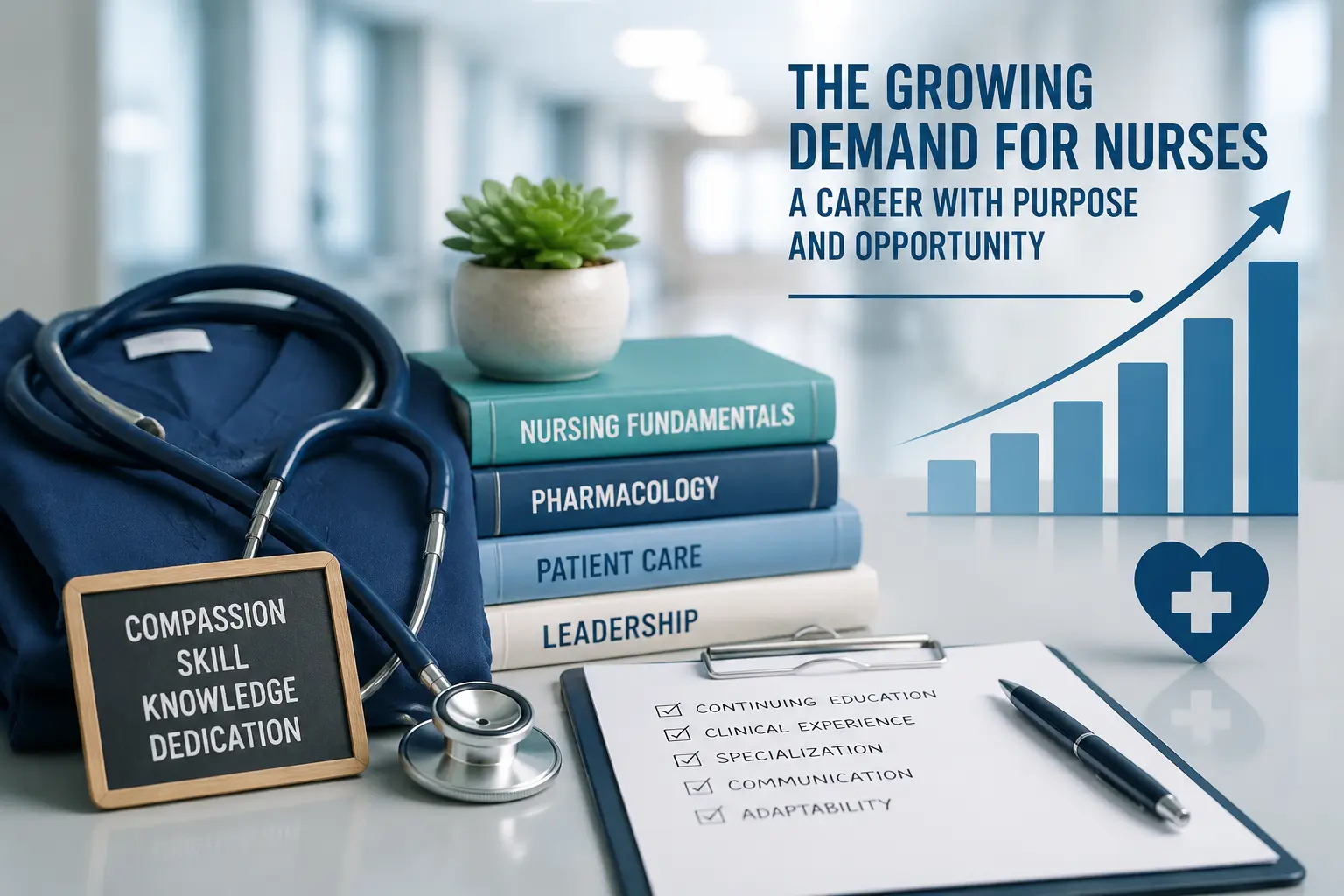
Healthcare systems are facing a sustained shortage of qualified nurses, and the gap between open roles and available professionals continues to widen. An aging population, expanding chronic care needs, and a wave of retirements within the existing nursing workforce have created conditions where hospitals, clinics, and community health organizations are competing for the same pool of candidates. For anyone considering a career change or stepping into healthcare for the first time, the timing has rarely been more favorable. The opportunity is real, but so is the level of preparation required to enter the field with confidence and stand out in a competitive applicant pool.
Nursing is no longer viewed simply as a service profession. It has become a clinical, technical, and leadership role that touches nearly every part of patient care. Hospitals expect new nurses to walk in with strong reasoning skills, hands-on experience, and the ability to adapt to complex environments. That shift in expectations has changed how aspiring nurses approach their education, their early career choices, and the credentials they pursue. Positioning yourself for success means understanding what employers actually want and aligning your training accordingly.
Choosing an Accelerated Path into the Profession
For career changers and second-degree students, traditional four-year nursing programs are not always practical. Many candidates already hold a bachelor’s degree in another field and want a focused route that builds on their academic foundation without repeating general education coursework. Accelerated nursing programs were designed for exactly this audience, offering condensed, full-time study that leads directly to registered nurse licensure. Program length has become one of the biggest deciding factors, with applicants weighing how soon they can realistically begin practicing. Those who want the shortest possible route to licensure typically opt for the fastest ABSN programs, which compress the full curriculum into roughly twelve months of intensive study.
The shorter the program, the more demanding it tends to be. Students who succeed in these formats usually share a few characteristics: they have completed prerequisite science courses before applying, they have organized their personal and financial responsibilities in advance, and they are prepared to treat the program as a full-time job.
Understanding What Is Driving the Demand
The shortage of nurses is not a temporary trend tied to a single event. It reflects bigger changes in how care is delivered and who is receiving it. Older patients require more frequent and more complex interventions, and the rise of long-term conditions has shifted nursing responsibilities into outpatient clinics, rehabilitation centers, home care, and specialized units. At the same time, a large portion of the existing nursing workforce is approaching retirement, which means even stable hiring environments are losing experienced staff faster than replacements can be trained.
Healthcare employers have responded by broadening their recruitment efforts, offering signing incentives, and investing in onboarding programs for new graduates. This creates real momentum for newcomers, but it also raises the bar. Facilities want nurses who can integrate quickly, communicate effectively, and contribute beyond basic clinical tasks.
Building the Skills Employers Actually Look For
Clinical competence is the foundation, but it is rarely the only factor in hiring decisions. Strong communication, situational awareness, and the ability to work within a team are often what separate strong candidates from average ones. Nurses interact with patients during some of the most stressful moments of their lives, and they coordinate with physicians, technicians, and administrative staff throughout every shift. Employers want to see that a candidate can hold those interactions together calmly and professionally.
Critical thinking is another skill that gets weighed heavily during interviews. Patients rarely present in textbook ways, and a nurse’s ability to assess, prioritize, and escalate appropriately can shape clinical outcomes. Building this skill takes time, but it starts in school through case-based learning, simulation labs, and clinical rotations that push students to make decisions under pressure.
Technology has also reshaped expectations. Electronic health records, monitoring equipment, and digital communication tools are part of daily practice now. Comfort with technology will not replace clinical judgment, but resistance to it can hold a candidate back during the application process.
Gaining Experience Before You Graduate
The students who land strong first positions are usually the ones who invested in experience early. Clinical rotations offer the most direct exposure, but they are not the only opportunity. Volunteering at community health events, shadowing nurses in different specialties, and taking part in professional student organizations all add depth to a resume. These activities also help students figure out which areas of nursing align with their personality and goals, whether that is emergency care, pediatrics, mental health, or something else entirely.
Networking matters more than most students realize. Many nursing jobs are filled through referrals or relationships built during clinical placements. Treating every rotation as an extended interview is one of the most practical habits a student can develop. Showing up prepared, asking thoughtful questions, and following up with preceptors after a rotation ends can lead directly to job offers.
Planning the Long Game
Entering the profession is the beginning, not the destination. Nurses who think strategically about their careers tend to advance faster and find more fulfilling roles. Some pursue specialty certifications after a few years of clinical practice. Others move into education, research, administration, or advanced clinical roles. Identifying potential directions early, even without committing to one, can help guide decisions about where to work, which mentors to seek out, and which skills to develop.
Financial planning also deserves attention. Nursing offers strong earning potential, but new graduates often carry educational costs into their first few years of work. Budgeting carefully, understanding loan repayment options, and considering employer tuition assistance programs can ease the transition and free up energy for clinical growth.
The demand for nurses is creating a window of opportunity that thoughtful candidates can use to their advantage. Those who prepare deliberately, choose the right educational path, and approach the profession with curiosity and discipline will find themselves in a strong position from day one.