
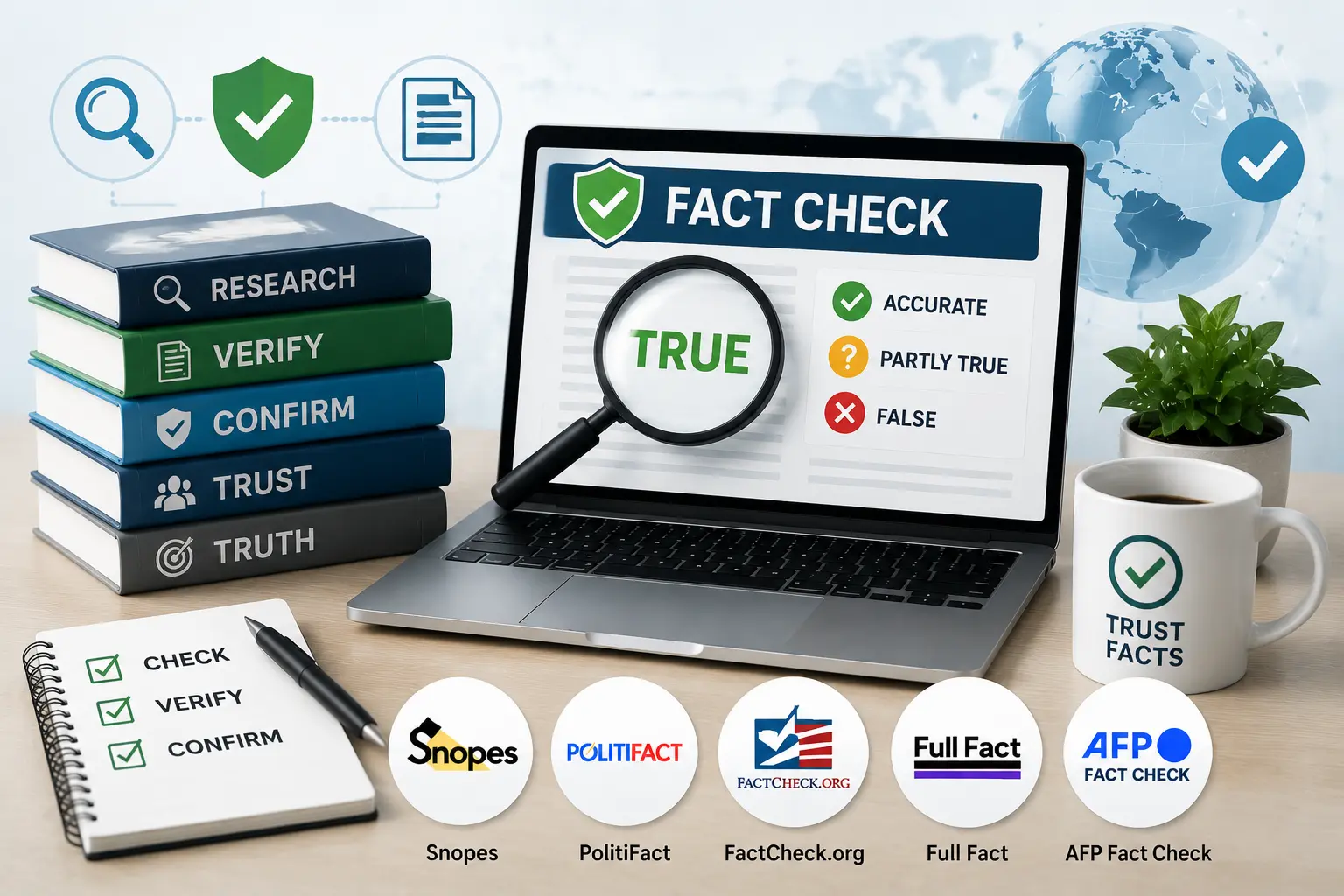
In today’s digital age, misinformation spreads faster than ever. With the constant flow of news, social media posts, and viral content, it has become difficult to distinguish truth from fabrication. Fact-checking websites play a crucial role by helping users verify claims, debunk myths, and make informed decisions based on accurate information. In this article, we’ll explore the top five fact-checking sites to help you navigate online information verification.
Why Fact-Checking Matters in the Digital Age
Before diving into the list, it’s important to understand why fact-checking is essential. Social media algorithms often prioritize engagement over accuracy, allowing false information to spread rapidly. Studies show misleading content spreads faster than corrections or factual updates. This creates a ripple effect where false narratives gain traction before they can be addressed. Fact-checking sites employ trained journalists, researchers, and subject matter experts who investigate claims, verify sources, and provide context. By relying on these platforms, users can develop better media literacy skills and become more discerning consumers of information.
1. Snopes
Snopes is widely regarded as one of the pioneers of online fact-checking. Founded in the mid-1990s, this platform has built a reputation for investigating urban legends, viral rumors, hoaxes, and misleading claims circulating online.
Key Features:
- Comprehensive database covering decades of fact-checks
- Clear rating system (True, False, Mixture, Unproven, etc.)
- Detailed explanations with cited sources
- Coverage spans politics, health, entertainment, and internet culture.
Snopes stands out for its longevity and extensive archive. Whether verifying a decades-old urban legend or a recent viral post, Snopes has likely investigated it. The site offers thorough breakdowns of each claim, explaining the rumor’s origin and presenting evidence that supports or refutes it.
For everyday users dealing with chain messages, forwarded WhatsApp texts, or trending social media claims, Snopes remains a go-to resource for quick verification.
2. PolitiFact
PolitiFact specializes in fact-checking statements made by politicians, public figures, and political organizations. Operated by the Poynter Institute, this Pulitzer Prize-winning website has become a staple for anyone interested in political accuracy.
Key Features:
- Famous “Truth-O-Meter” rating scale
- Focus on statements from elected officials and candidates.
- “Flip-O-Meter” tracks how politicians’ positions change over time.
- Comprehensive coverage of major political speeches, debates, and interviews
The Truth-O-Meter rates statements from “True” to “Pants on Fire,” providing an intuitive visual of accuracy. This lets readers quickly gauge a claim’s reliability without reading lengthy analyses, though detailed explanations are available for those seeking deeper context.
PolitiFact’s methodology includes examining primary sources, consulting experts, and providing historical context for political claims. This makes it especially valuable during election seasons when political rhetoric intensifies and misinformation rises.
3. FactCheck.org
Operated by the Annenberg Public Policy Center at the University of Pennsylvania, FactCheck.org is a nonpartisan, nonprofit organization dedicated to reducing deception in U.S. politics.
Key Features:
- Nonpartisan approach with academic backing
- Detailed analysis of political ads, speeches, and viral claims
- Special focus on debunking medical and scientific misinformation
- “Viral Spiral” section addressing trending false claims online
FactCheck.org stands out for its academic rigor and commitment to nonpartisanship. The organization not only identifies false claims but also explains the broader context, including why some statements may be misleading even if partially true. It has gained prominence for its coverage of health-related misinformation, particularly during public health crises when accurate medical information becomes critical. Their detailed breakdowns help readers understand not just what is false, but why certain claims gained traction in the first place.
4. Full Fact
Full Fact is the United Kingdom’s independent fact-checking organization, though its work is relevant to a global audience given the interconnected nature of online information. This nonprofit organization focuses on improving public debate through accuracy and transparency.
Key Features:
- UK-based but covers internationally relevant topics.
- Works directly with social media platforms to flag misinformation
- Provides toolkits and resources for media literacy
- Campaigns for corrections when inaccurate information is published
Full Fact is noteworthy for its proactive approach to combating misinformation. Beyond identifying false claims, the organization actively campaigns for corrections and works with tech companies to limit the spread of debunked content.
Full Fact offers educational resources to help individuals develop fact-checking skills, empowering users to become more critical consumers rather than relying solely on third-party verification.
5. AFP Fact Check
Agence France-Presse (AFP), one of the world’s oldest news agencies, operates a dedicated fact-checking service that has become increasingly important in the fight against global misinformation. AFP Fact Check covers claims circulating in multiple languages and regions worldwide.
Key Features:
- Global coverage with content available in numerous languages
- Backed by AFP’s extensive network of journalists worldwide
- Specializes in debunking manipulated images and videos
- Rapid response to breaking news misinformation
AFP Fact Check’s global reach makes it valuable for verifying international claims that may not get attention from US or UK-focused fact-checkers. The team’s expertise in identifying manipulated media—including doctored images and deepfake videos—is increasingly relevant as visual misinformation grows more sophisticated.
With AFP’s extensive network of correspondents worldwide, this fact-checking service can often verify or debunk international claims faster than other organizations.
How to Use Fact-Checking Sites Effectively
Knowing these resources exist isn’t enough; using them effectively requires strategy:
Cross-reference multiple sources: Don’t rely on a single fact-checking site. If a claim seems particularly significant or controversial, check multiple platforms to see if there’s consensus.
Read the full explanation: Ratings like “True” or “False” provide quick answers, but the detailed explanations often contain important context and nuance that simple labels can’t capture.
Check the date: Information changes over time, especially regarding ongoing situations. Make sure the fact-check you’re reading is current and relevant to the claim you’re investigating.
Understand the methodology: Each organization has its own approach to fact-checking. Familiarizing yourself with how these sites conduct their research can help you better interpret their findings.
Use search functions: Most fact-checking sites have robust search capabilities, allowing you to quickly find information on specific claims, people, or topics.
The Limitations of Fact-Checking Sites
While these platforms are invaluable resources, it’s worth acknowledging their limitations. Fact-checking organizations cannot cover every claim circulating online the sheer volume of content makes this impossible. Additionally, by the time a thorough fact-check is published, misinformation may already have spread widely.
There’s also the challenge of claims that fall into gray areas statements that aren’t entirely false but lack important context, or predictions about future events that can’t be definitively verified at the time they’re made.
Despite these limitations, fact-checking sites remain essential tools in the broader ecosystem of information verification. They provide a starting point for critical thinking and often offer the research and context needed to evaluate claims independently.
Conclusion
In an era where information and misinformation travels at unprecedented speeds, fact-checking websites serve as crucial allies for anyone seeking to navigate the digital landscape responsibly. Snopes, PolitiFact, FactCheck.org, Full Fact, and AFP Fact Check each bring unique strengths to the table, from comprehensive historical archives to specialized political analysis and global coverage.
By incorporating these resources into your information consumption habits, you can become a more informed, discerning reader. Remember that fact-checking isn’t just about catching others spreading false information—it’s about developing the critical thinking skills necessary to evaluate claims before sharing them yourself. In doing so, you contribute to a healthier information ecosystem for everyone.





