
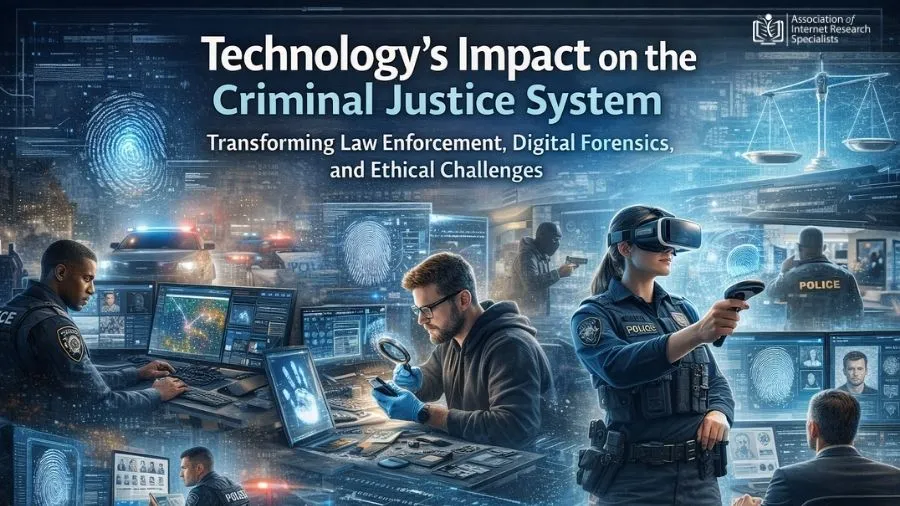
Technology has become a driving force in the evolution of the criminal justice system, fundamentally transforming how professionals work and the skills they need to excel. From law enforcement agencies integrating artificial intelligence to courtrooms relying on digital forensics, technology is not just an enhancement—it’s essential to the modern approach to justice. Students and current professionals alike can benefit from advancing their skills, such as pursuing a degree in master’s in criminal justice online, to keep pace with this rapidly changing landscape.
Technological advancements are opening up new career paths, making roles more specialized while simultaneously presenting fresh challenges relating to ethics and privacy. The use of digital tools in policing, investigations, and legal advocacy means professionals must be more adaptable, analytical, and aware of the implications of these innovations.
As employers seek candidates who understand both traditional criminal justice principles and emerging technologies, a commitment to lifelong learning and digital literacy is more crucial than ever. This not only improves individual career prospects but also contributes to more effective and equitable justice outcomes.

AI and Machine Learning in Law Enforcement
Artificial intelligence and machine learning are rapidly becoming indispensable tools for law enforcement agencies. These technologies process vast datasets—such as crime statistics, social media activity, and video surveillance—to predict criminal behavior and optimize response strategies. For example, the Los Angeles Police Department’s adoption of predictive crime mapping using AI has enabled resources to be focused where most needed, increasing the efficiency of patrols and investigations. But this progress brings scrutiny about fairness and bias in algorithmic decisions, making transparency and oversight essential.
Digital Forensics and Cybercrime Investigation
As cybercrime escalates, so does the importance of digital forensics—the practice of recovering, analyzing, and preserving digital evidence. Criminal justice experts in this area work to unravel cases of hacking, identity theft, and online fraud, tracing digital footprints that criminals attempt to erase. Their findings are often key in prosecuting cyber offenders, highlighting the growing need for tech-savvy investigators capable of responding to threats that cross both physical and virtual boundaries. The FBI’s Cyber Division is just one example of how law enforcement agencies are adapting to this new frontier.
Social Media as an Investigative Tool
Social media platforms are much more than communication tools—they are treasure troves of evidence for criminal investigations. Detectives and analysts utilize sophisticated software to monitor open-source platforms for leads, patterns of suspicious activity, and real-time updates on criminal events. Analyzing this data can clarify motives, connect suspects to events, and reveal networks of criminal activity. Despite these advantages, utilizing social media for investigations must be balanced against individual rights and the ethical issues surrounding digital surveillance and privacy.
Biometric Technology and Rapid Identification
The use of biometric technologies, such as fingerprint readers and facial recognition, has revolutionized the identification and tracking of suspects. These advances significantly reduce the time required to identify someone compared to traditional methods, resulting in swifter investigations and more efficient legal processes. The FBI’s Next Generation Identification system leverages various biometric modalities, enhancing both accuracy and efficiency for agencies nationwide. As this technology proliferates, ensuring unbiased performance and appropriate oversight is vital to prevent misuse and maintain public trust.

Virtual Reality in Training and Simulations
Virtual reality (VR) is being leveraged to immerse law enforcement officers in lifelike scenarios, such as tense negotiations or active shooter situations. These safe, controlled environments allow officers to practice decision-making, communication, and tactical skills, resulting in better-prepared professionals when faced with real emergencies. Beyond basic training, VR is used for ongoing professional development and testing responses to new types of incidents as technology evolves and criminal tactics change.
Predictive Policing and Data-Driven Strategies
Predictive policing uses algorithms and analytics to identify future crime hotspots, enabling preemptive action. Departments using this method can deploy officers to high-risk areas, allocate resources efficiently, and potentially prevent crime before it happens. Critics, however, warn that predictive policing can perpetuate existing biases in law enforcement data, underscoring the necessity for ongoing evaluation and reform of such programs.
Ethical Considerations and Privacy Concerns
With every new technological advance, discussions about privacy, civil liberties, and potential misuse become increasingly urgent. AI, biometrics, and surveillance tools require clear legal frameworks and transparent policies to ensure they do not infringe on individual rights or enable discrimination. Public agencies must prioritize accountability and establish checks and balances for how data is collected, stored, and used, instilling confidence in the justice system while protecting personal freedoms.
Preparing for a Tech-Driven Criminal Justice Career
The future of criminal justice demands continuous upskilling. Professionals and aspiring candidates should consider combining traditional criminal justice studies with in-demand technical skills in digital forensics, cybersecurity, and data analysis. Advanced programs, especially those offered online, provide flexibility while ensuring that graduates are equipped to navigate the complexities of a digital-first legal landscape. Lifelong learning and staying current with technological trends can guarantee career progression and readiness for emerging roles.
The rapid integration of technology into every facet of criminal justice marks a new era of opportunity and responsibility. By embracing innovation, acquiring new competencies, and remaining ethically vigilant, today’s professionals can make meaningful contributions to justice and public safety in a rapidly evolving world.





